
A Dune and Fences Photo Story – Reflections from 2023 to 2026
Preface
“In June 2023, Galway City Council, in conjunction with the University of Galway and the Atlantic Seaboard North Climate Action Regional Office (CARO), will carry out a pilot project to install sand fencing at Grattan Beach.
The pilot project will help us develop nature-based solutions to manage Grattan Beach and sand dunes, as a ‘Living Lab’ for Galway City. A ‘Living Lab’ is where scientists move from the laboratory to the real world to find solutions to problems, working with other experts and the public.
This project extends the work of the community-led ‘I Like Beaches’ project (since 2012), where local groups have been contributing their ideas to develop a Living Lab that would make space for nature and visitors on Grattan.”
About
On a sunny day in early 2023, Galway City Council’s Parks & Roads Team installed hundreds of metres of chestnut sand fencing along Grattan Beach in Salthill.
From that moment, Galway Atlantaquaria began documenting the project to see how these simple chestnut wooden fences would influence the beach over time.
Working within Explore Your Shore! framework, supported by the National Biodiversity Data Centre, we wanted to answer a series of important questions:
- Could sand fences reduce sand loss?
- Would they encourage coastal plants to grow?
- Could they contribute to climate change adaptation?
- Would they increase biodiversity?
- And finally—would people like them?
Over three years, from 2023 to 2026, we observed the beach changing season by season. What follows is the story of those changes.
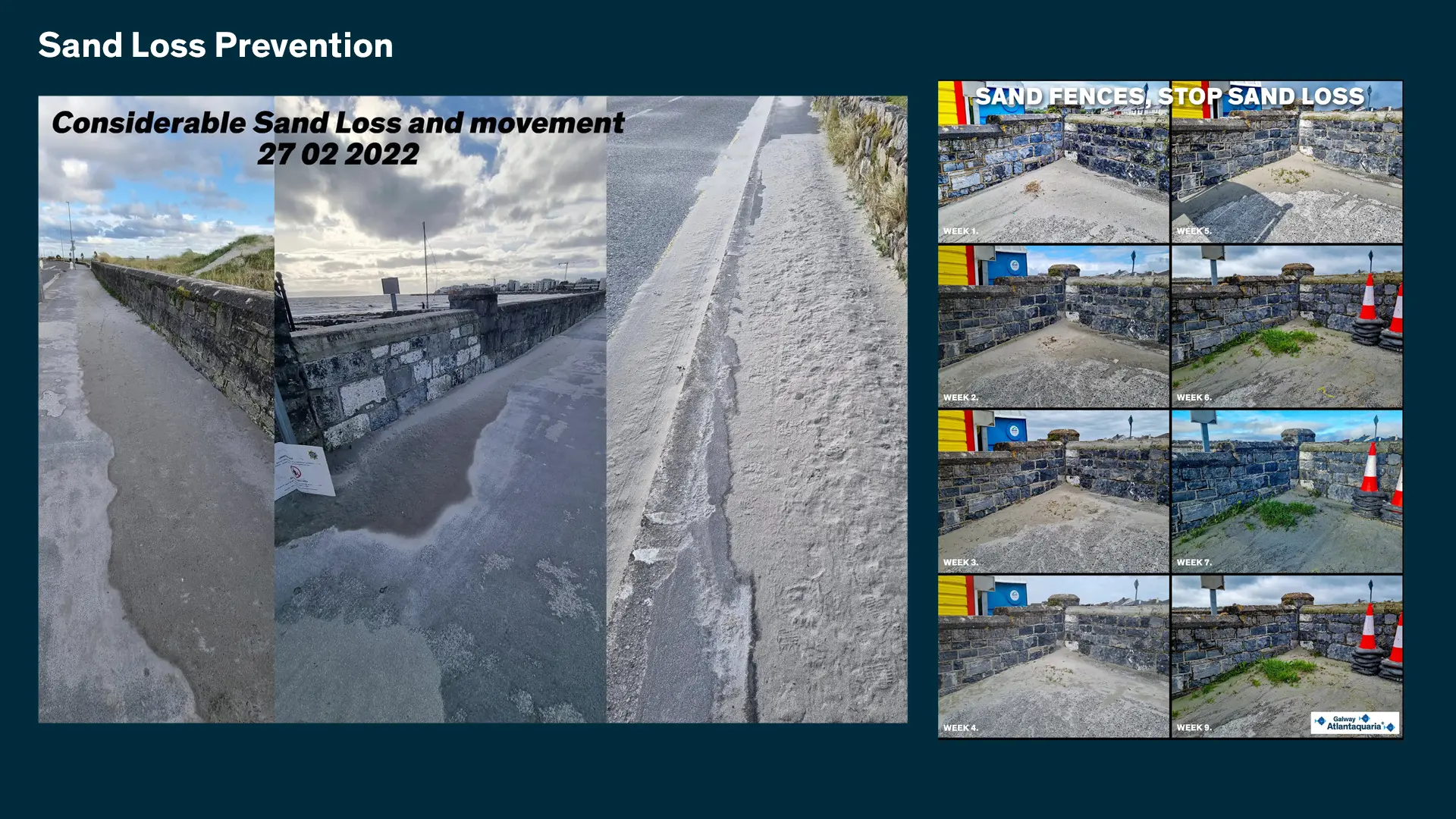
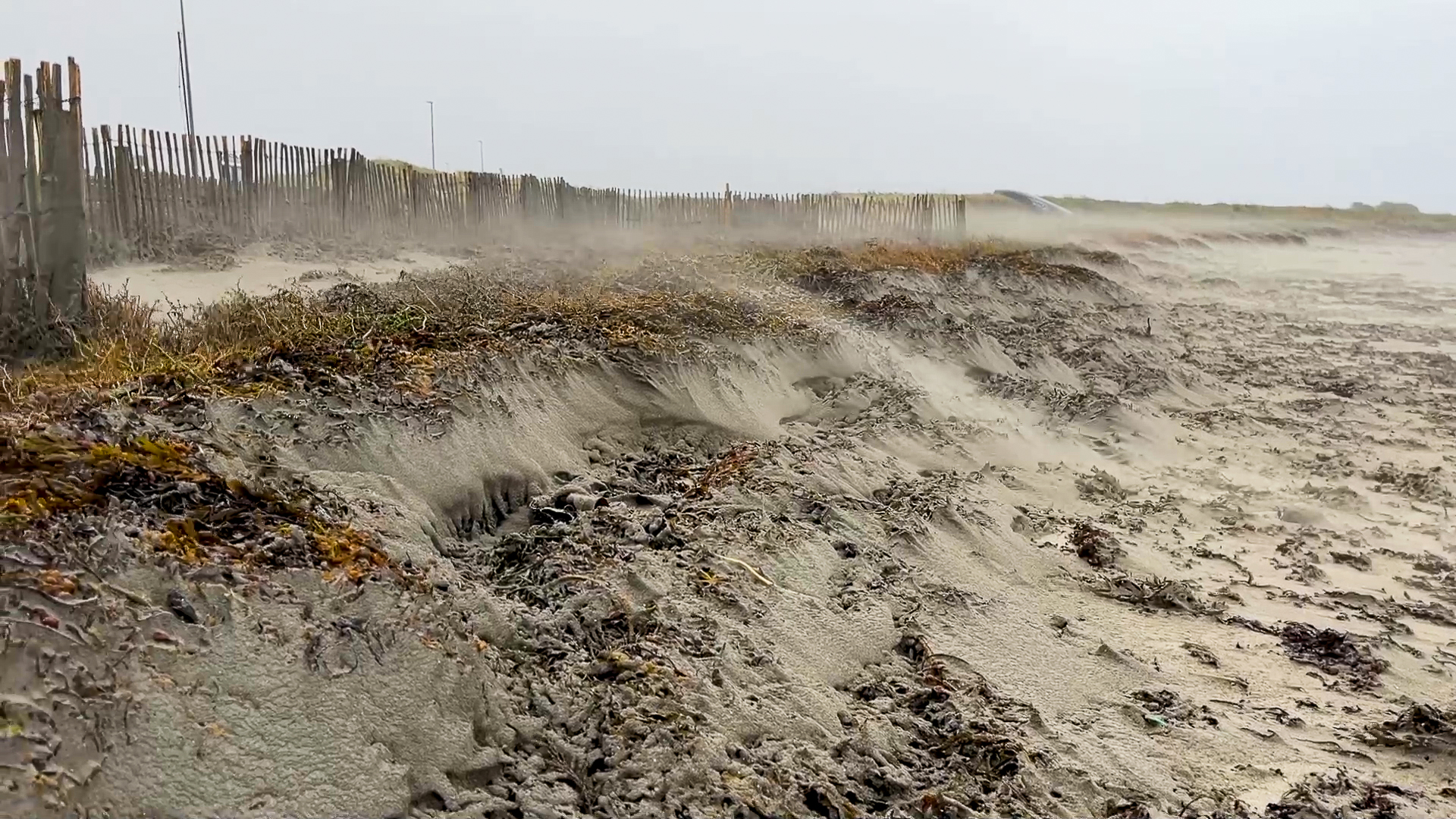
One of the primary aims of installing the sand fences was to reduce the amount of sand being blown off the beach.
Sand fences work by slowing the wind. Their open design allows air to pass through while reducing its speed, causing wind-blown sand to settle and gradually build new dunes.
Did it work? Yes.
Our photographs clearly show that much of the sand that would previously have blown across the road was instead captured behind the fences, where it accumulated and formed new embryo dunes. Although some people see blowing sand as simply part of a natural beach system, excessive sand loss has serious consequences.
When beaches lose sand, they lose one of their greatest natural defences against storms. Dunes and beaches absorb wave energy and reduce flooding. As the Climate Action Regional Office (CARO) explains, every grain of sand contributes to the protective buffer between land and sea. Without that buffer, storm surges can travel further inland, increasing the risk of flooding and erosion. Ireland’s coastline has always changed naturally through processes such as longshore drift, which moves and replenishes sand. Today, however, coastal erosion is being accelerated by both human activities and changing climate conditions.
Dr Aoife Blowick of the University of Galway beautifully explains the importance of sand in her RTÉ Brainstorm article With Every Grain of Sand.
https://www.rte.ie/brainstorm/2019/0204/1027411-with-every-grain-of-sand-a-history-of-sand
To learn more about the vulnerability of sand, see:
https://www.caro.ie/projects-research/campaigns/sand-dune/the-vulnerability-of-sand-dunes
If stopping sand loss had been the only outcome of this project, it would already have been a success.
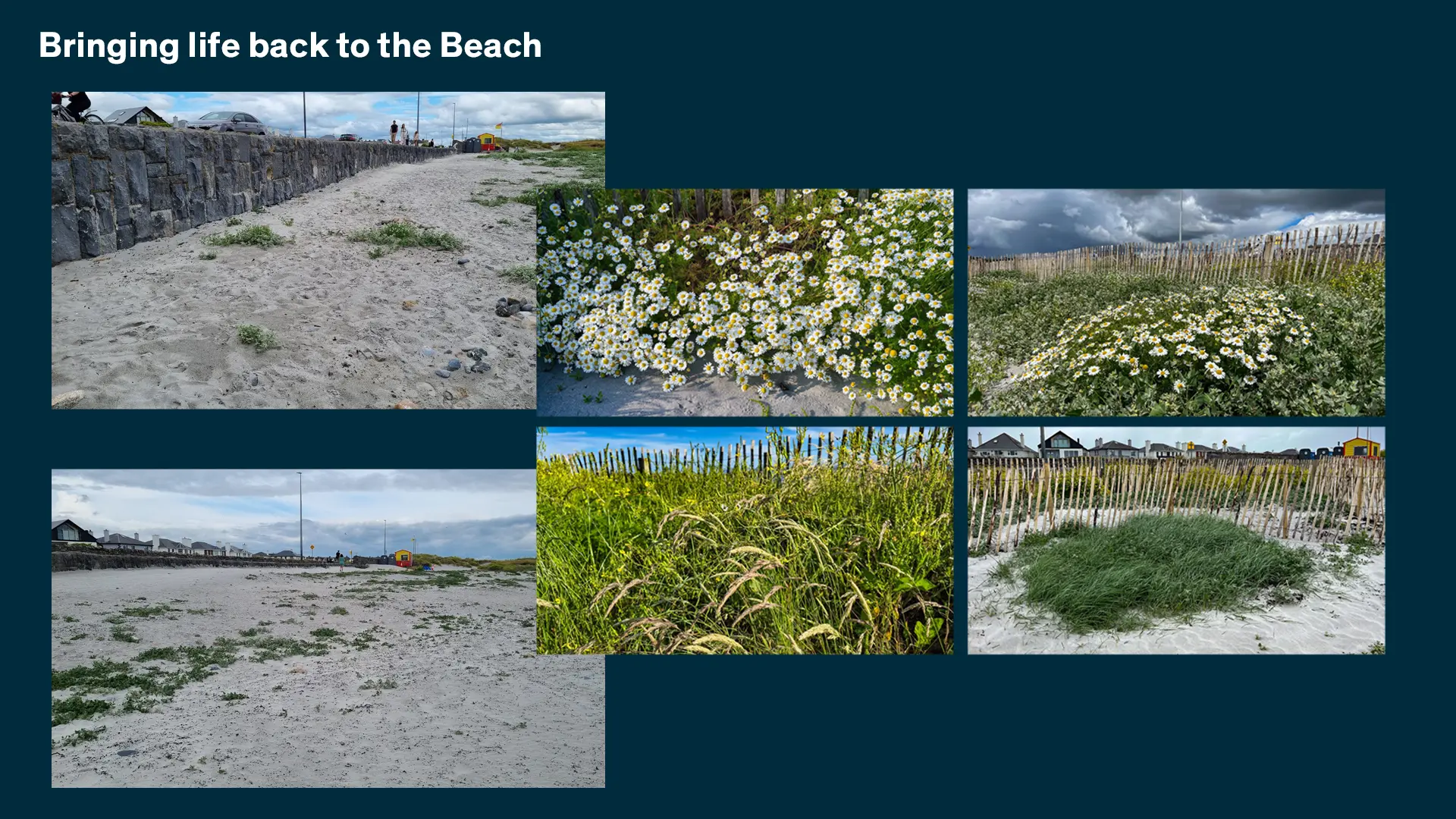
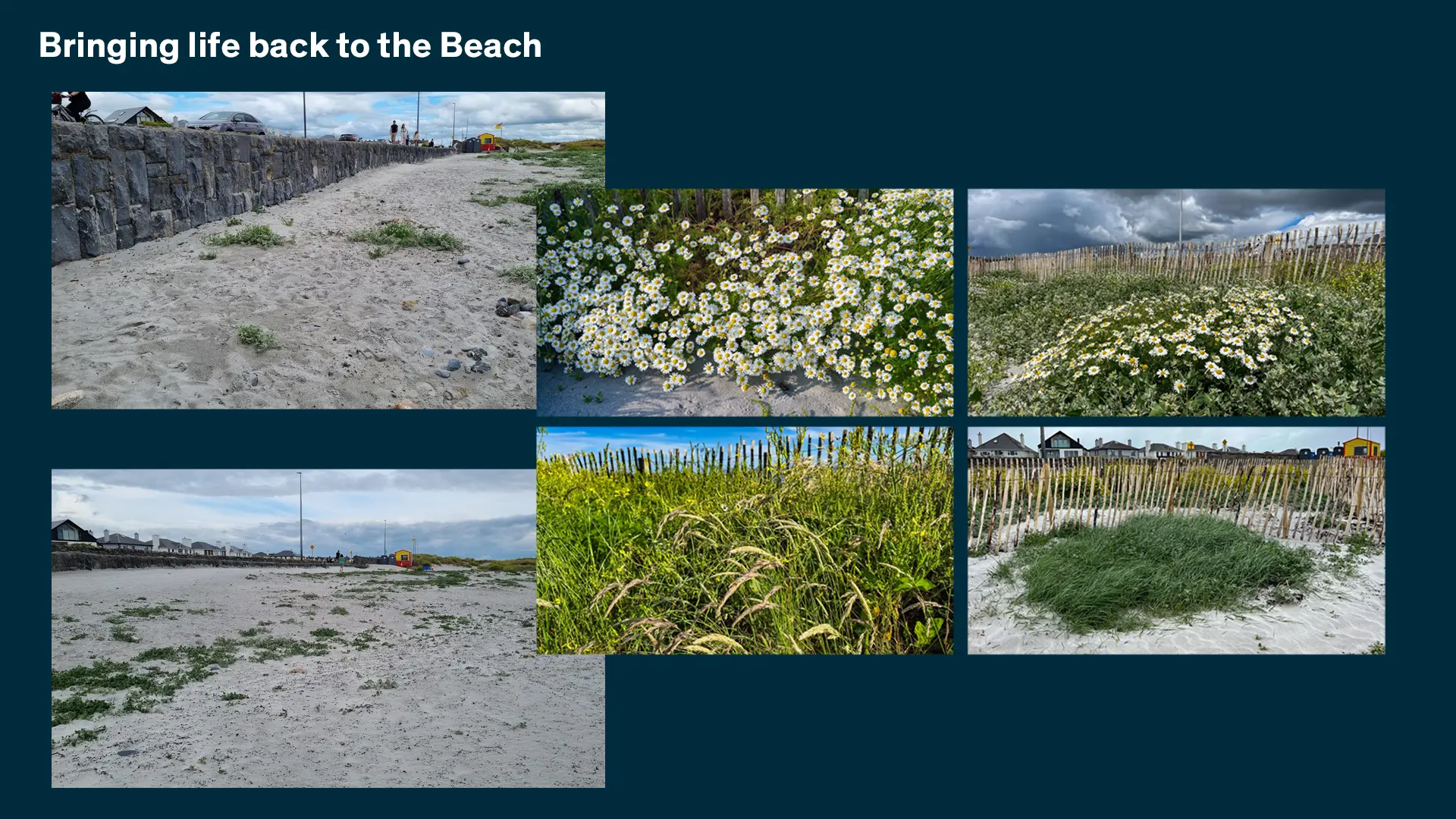
Before the fences were installed, Grattan Beach already supported scattered populations of Sea Rocket, Sea Radish, Sea Beet, Marram Grass and Sand Couch. However, these plants were often short-lived. Strong winds, winter storms and heavy trampling frequently destroyed young vegetation before it could stabilise the dunes.
The sand fences project changed that.
By trapping sand and reducing wind speeds, they created sheltered conditions where pioneer plants could establish themselves far more successfully.
Within weeks, vegetation began expanding behind the fences. This is Nature-based Solutions (NbS) in action.
The fences acted as a protective bulwark, allowing coastal plants to trap even more sand and strengthen the developing dunes.
During the first few years an interesting pattern emerged.
Sea Rocket, with its brilliant white flowers, dominated the most exposed areas closest to the sea, while Sea Radish gradually occupied slightly more sheltered ground with vibrant yellow blooms.
By 2026 both species had largely established their own territories.
This is a classic example of ecological succession.
Both species compete for space, yet together they improve the habitat by trapping sand and adding organic matter as they die back. In doing so, they prepare the ground for permanent dune builders such as Marram Grass and Sand Couch.
The beach was no longer simply an expanse of sand. It had become the beginning of a functioning dune ecosystem.
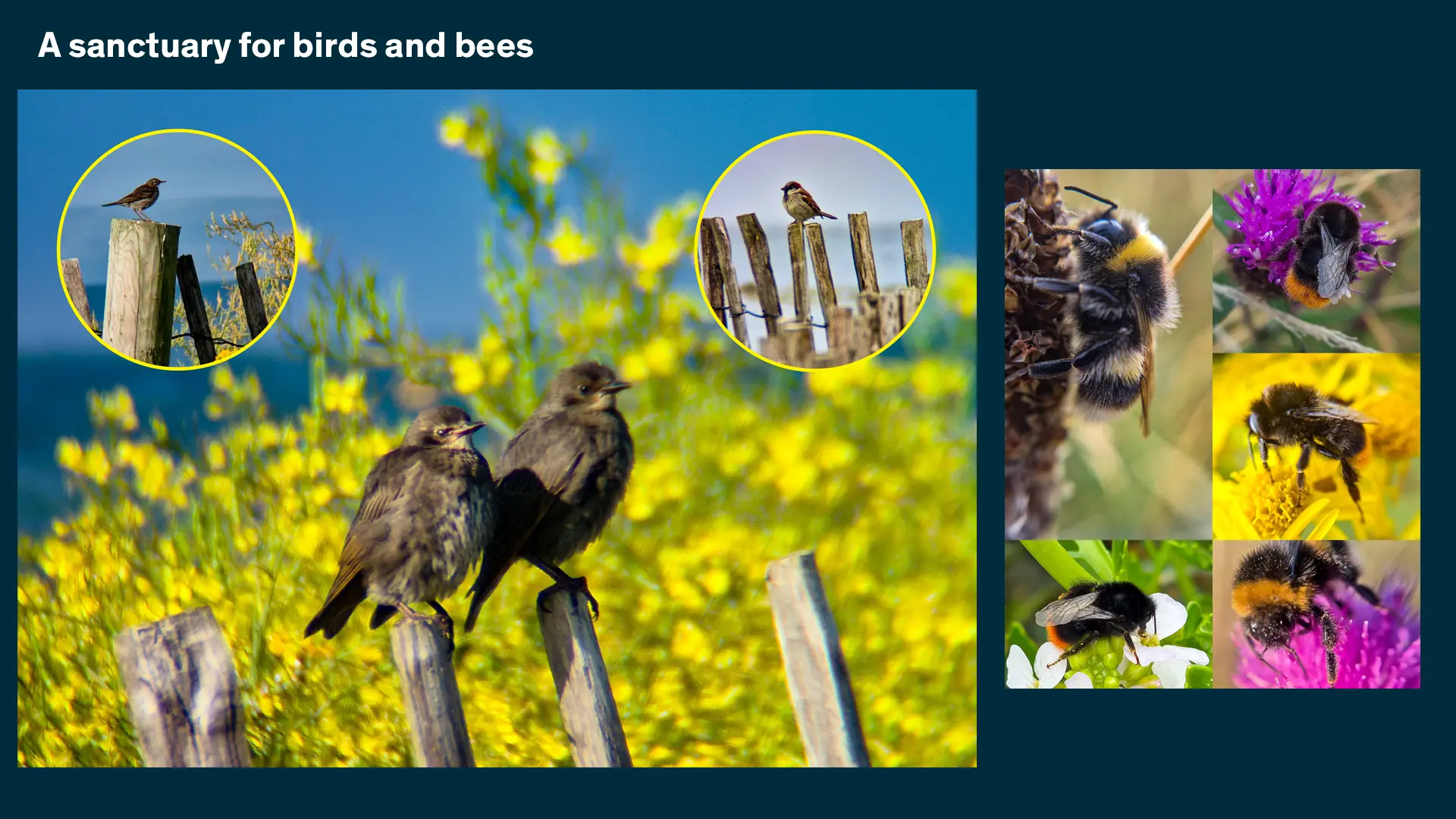
A Home/Sanctuary For Birds
As vegetation increased, wildlife followed.
The developing dunes provided shelter, nesting opportunities and food for a growing variety of birds and invertebrates.
The project became so successful that we created an entire YouTube playlist documenting bird life around the sand fences.
Species recorded include:
- Cormorant
- Bar-tailed Godwit
- Redshank
- Turnstone
- Oystercatcher
- Brent Goose
- Stonechat – Loved the Sand Fences
- Meadow Pipit – Loved the Sand Fences
- Goldfinch – Loved the Sand Fences
- House Sparrow – Loved the Sand Fences
- European Starling – Loved the Sand Fences
Several species, including Stonechat, Meadow Pipit, Goldfinch and Starling, regularly used the fences and surrounding vegetation as shelter and feeding areas.
Watch the playlists:
Meadow Pipit
Stonechat
Wetlands For Life Video Series
The fences did not simply hold sand. They created a habitat.
A Nature-based Defence Against Climate Change?
Historically, Salthill’s coastline has been protected using hard engineering.
Large boulders and rock armour were installed to deflect wave energy away from the promenade.
While these structures are important, they do not repair themselves after storms.
Nature does.
Healthy dune systems absorb wave energy, trap sand and rebuild themselves after damage.
During major storms such as Agnes (September 2023), Debi (November 2023), Ashley (October 2024), and Éowyn (January 2025) the dunes did resist and fully recover. Sand Couch proved remarkably resilient, surviving where loose sand had been stripped away. Unlike concrete or rock armour, living dunes are self-repairing.
The Grattan project is relatively small, so we cannot claim that it alone mitigates climate change.
However, it clearly demonstrates how Nature-based Solutions can increase coastal resilience by creating dynamic landscapes capable of recovering naturally after extreme weather.
For generations Salthill has been valued as a place for recreation and relaxation.
More recently we have begun talking about Ocean Literacy, Blue Health and our relationship with the sea.
These ideas are connected through what ecologists call Cultural Ecosystem Services CES.
These are the non-material benefits nature provides—beauty, recreation, inspiration, identity, wellbeing and a sense of place.
Walking through Grattan Beach today feels different.
Instead of a flat expanse of sand, people experience gentle dune shapes, flowering coastal plants, birds feeding among the vegetation and a landscape that changes every month.
The chestnut fencing itself blends naturally into the environment.
Rather than dominating the beach, it quietly supports the processes that create a healthier coastline.
Beauty is subjective.
But colourful flowers, living dunes and thriving wildlife create places where people naturally want to spend time.
What We Learned
The Grattan Beach Sand Fences Project has shown that relatively simple Nature-based Solutions can deliver multiple environmental benefits at once.
The project successfully:
- Reduced sand loss.
- Encouraged dune formation.
- Increased native coastal vegetation.
- Created habitat for birds and pollinators.
- Improved resilience to storms.
- Enhanced the natural beauty and ecological value of the beach.
None of this would have been possible without the collaboration between Galway City Council, the Parks & Roads Team, University of Galway, CARO, Galway Atlantaquaria, and local communities. The original idea, championed by Dr Kevin Lynch of the University of Galway after more than a decade of advocacy, has become an excellent example of how small interventions can create lasting environmental change. Nature is constantly rebuilding.
Looking Ahead
Our hope for 2027 is simple:
- Continue installing sand fences to strengthen dune development.
- Encourage even greater biodiversity along the shoreline.
- Enable more people to understand how dunes protect our communities.
More collaboration with other networks.
- Expand guided walks, biodiversity events and Explore Your Shore! Activities day/evening.
Examples include – Butterfly, Moth, Bumblebee, Flora, Fossil, Dune walks etc.
- Demonstrate how Nature-based Solutions can help protect Galway’s coastline for future generations.
- Create more records, infographics and posters.
Together we can ensure that Grattan Beach remains not only a place for recreation, but a living example of how people and nature can work together to build resilience against climate change and biodiversity loss.
.