
Six-Spot Burnet Moths
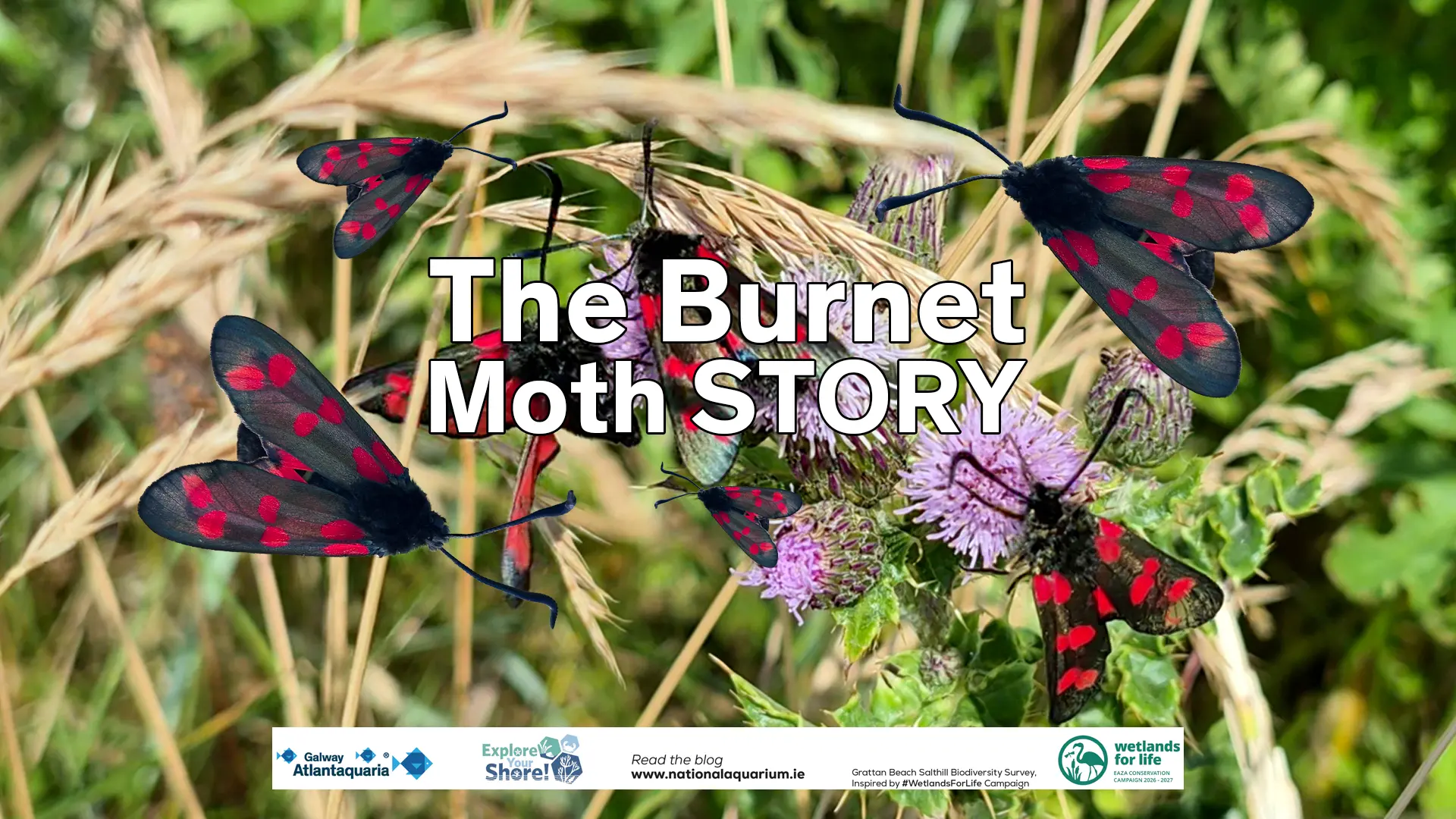
The Six-Spot Burnet Moth Story
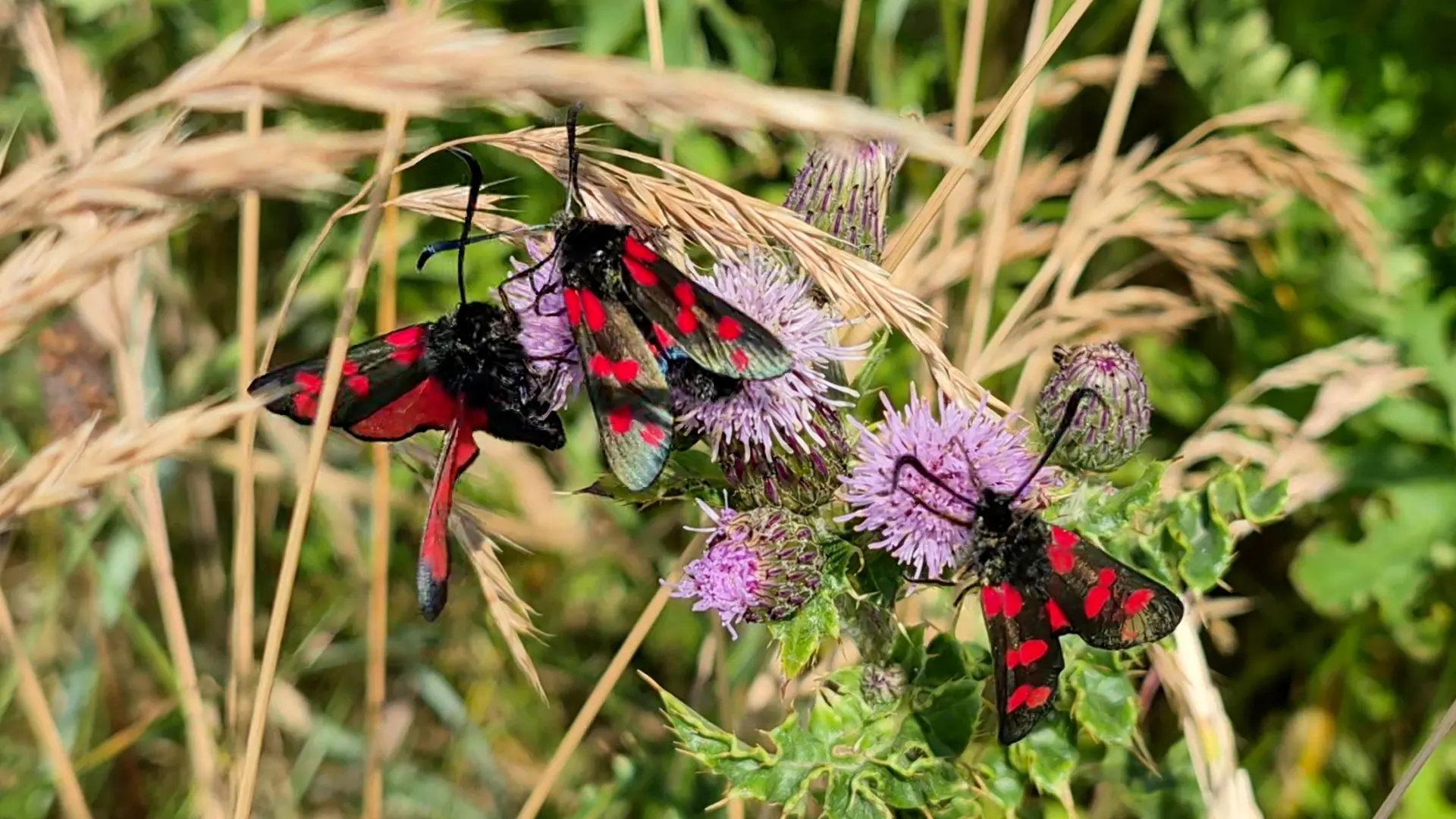
A Small Moth with a Big Story
The Six-spot Burnet (Zygaena filipendulae) is one of Ireland’s most colourful and unusual moths. Unlike most moths, it flies during the day and is instantly recognised by its metallic blue-black wings with six bright red spots.
Its presence is a sign of a healthy, species-rich grassland.
VIDEOS
During this three month survey we gathered lots of interesting footage, and you can watch these videos on our YOUTUBE playlist.
The moth depends almost entirely on Bird’s-foot Trefoil, a native wildflower that supports many insects and pollinators. Where burnet moths thrive, diverse coastal ecosystems are usually flourishing too.
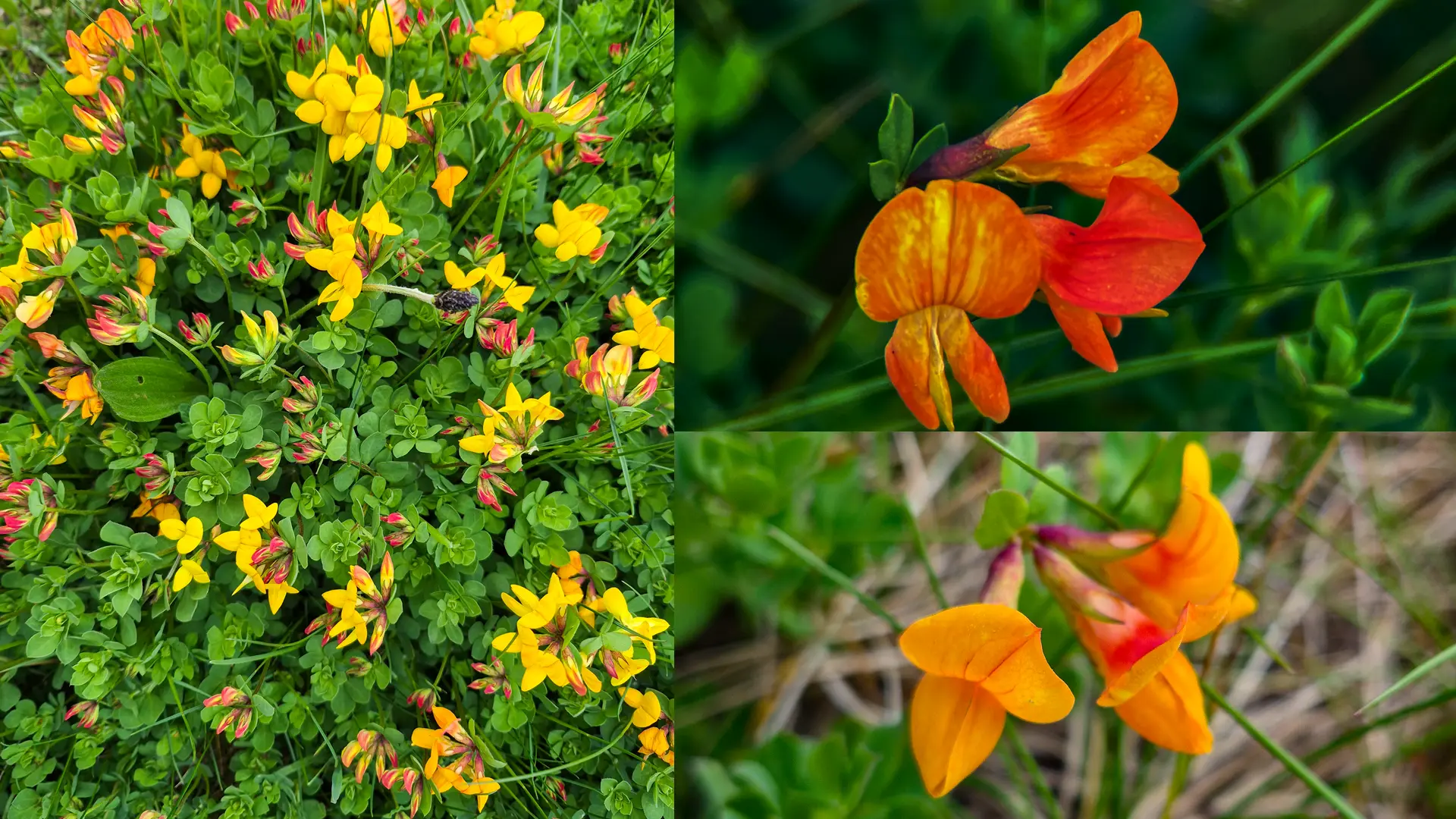
Birdsfoot Trefoil
Lotus corniculatus
Crobh éin
The Six-spot Burnet is therefore an excellent indicator species, telling us that Grattan Beach remains an important habitat for wildlife.
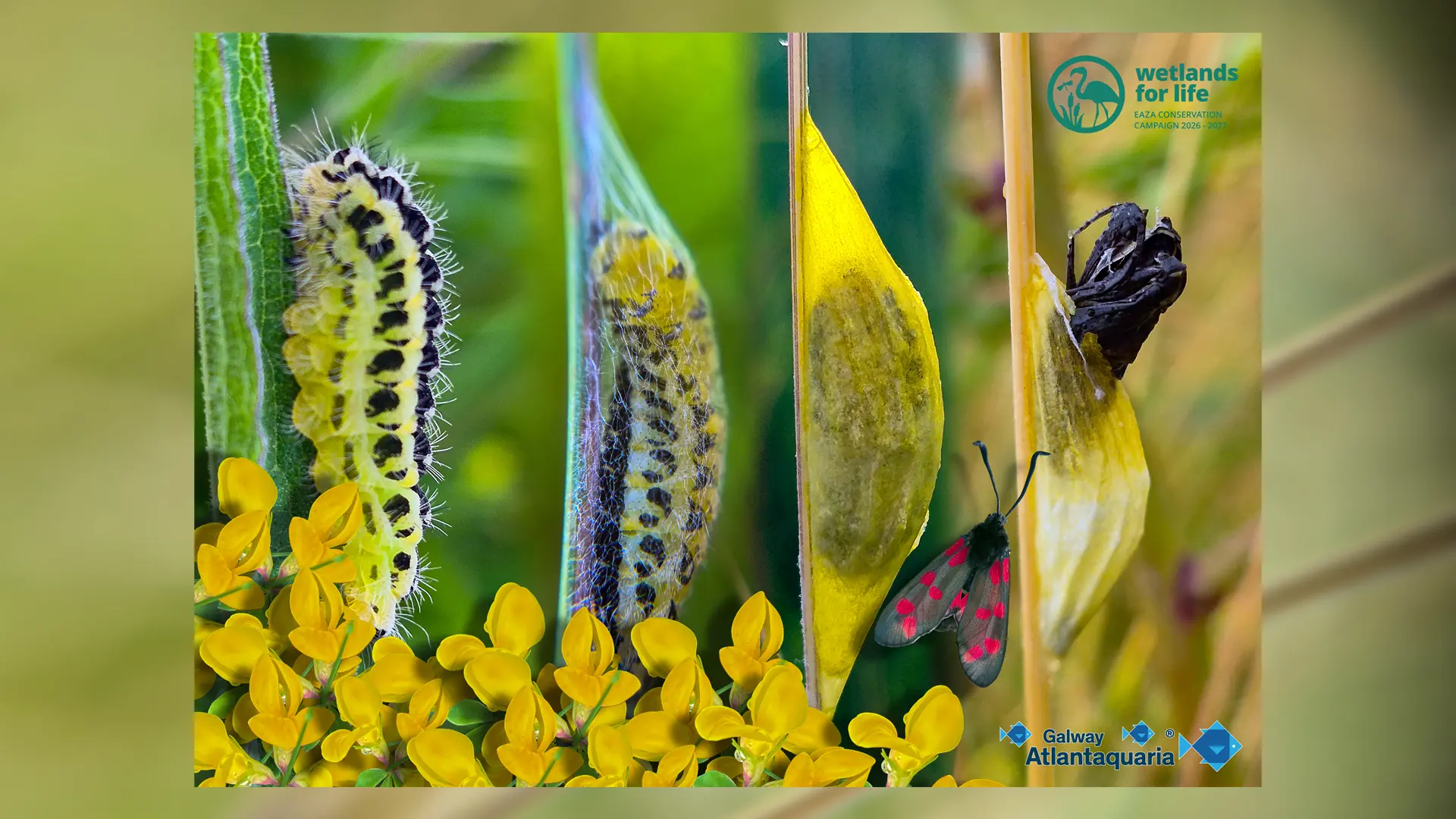
An Extraordinary Life Cycle (FYI) This story started last year, and we only witnessed one month of its life.
From Egg to Adult, the Six-spot Burnet completes a remarkable one-year life cycle.
Summer
Adults feed on nectar and lay eggs on Bird’s-foot Trefoil.
Autumn & Winter
Caterpillars feed before overwintering safely in the vegetation.
Spring
The caterpillars resume feeding and continue growing.
Early Summer
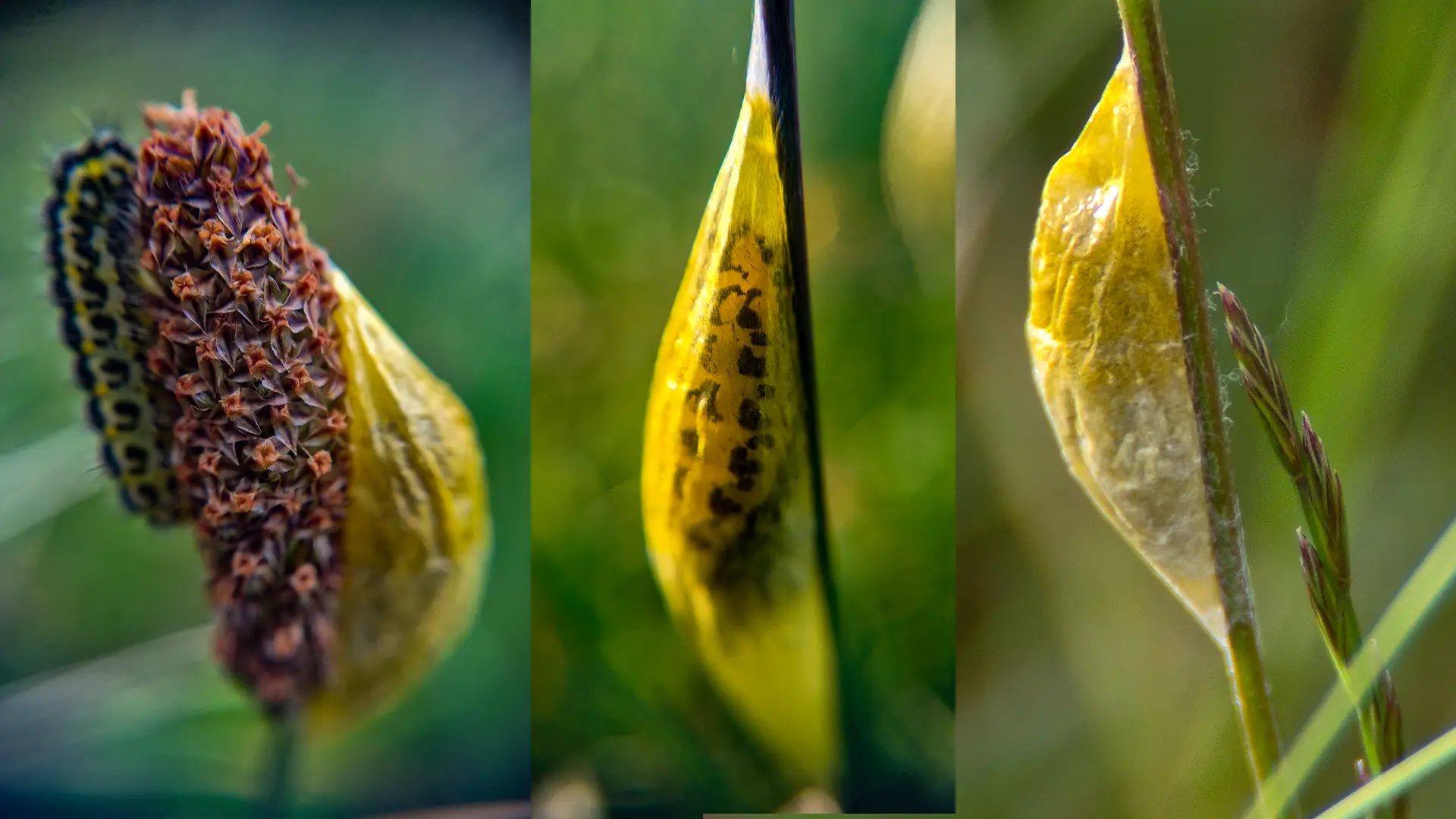
They spin distinctive papery cocoons attached to grass stems.
June–August
Adult moths emerge, feed, mate and begin the cycle again.
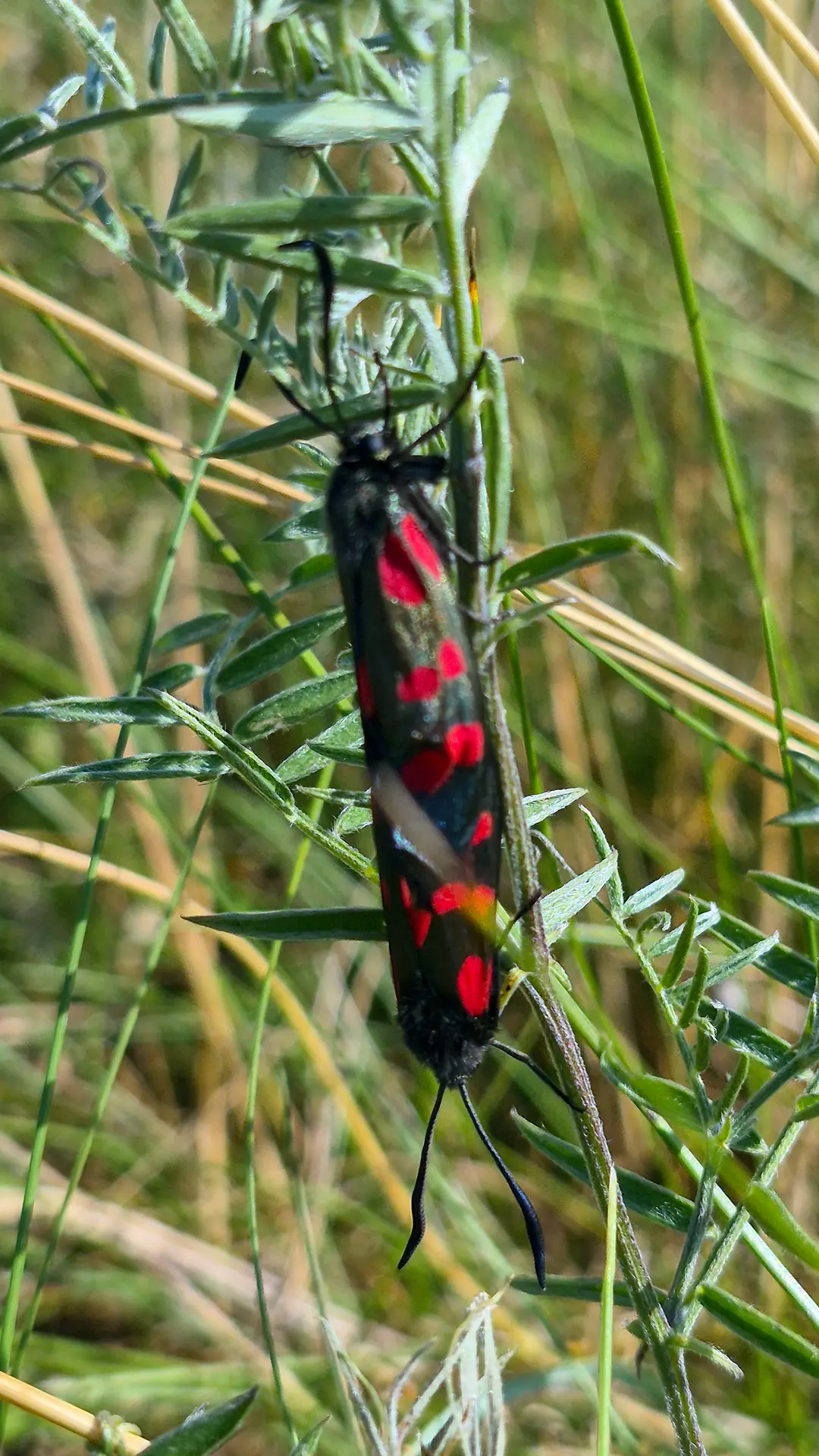
The exuvia
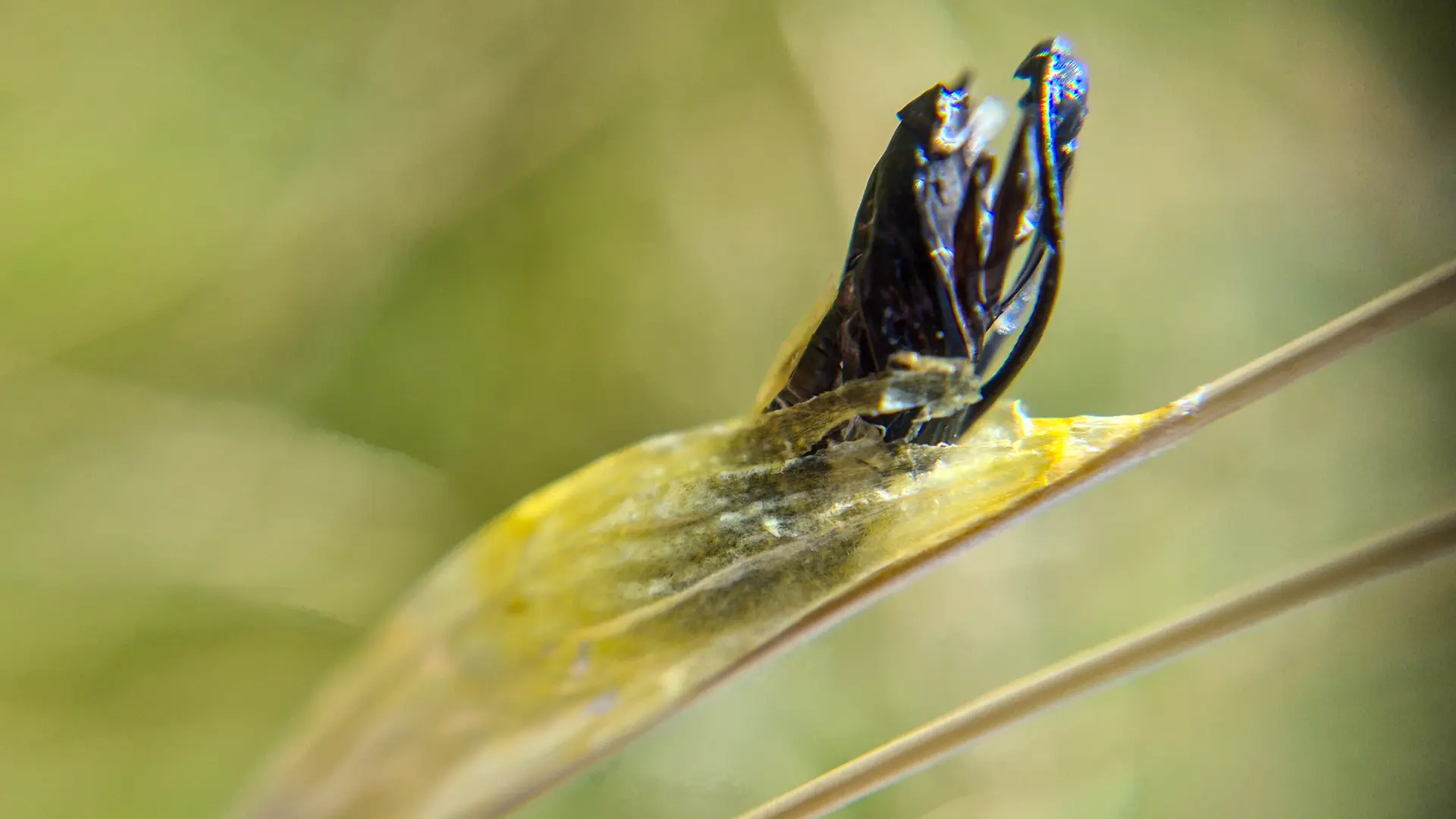
When the adult moth finishes its metamorphosis and emerges, it breaks out of its shell and leaves a ghostly, translucent brown pupal skin (exuvia) jutting halfway out of its papery, straw-colored silk cocoon.
During metamorphosis, a moth pupates inside a silk cocoon. When it emerges, it leaves behind its rigid outer shell—the exuvia. (plural exuviae)
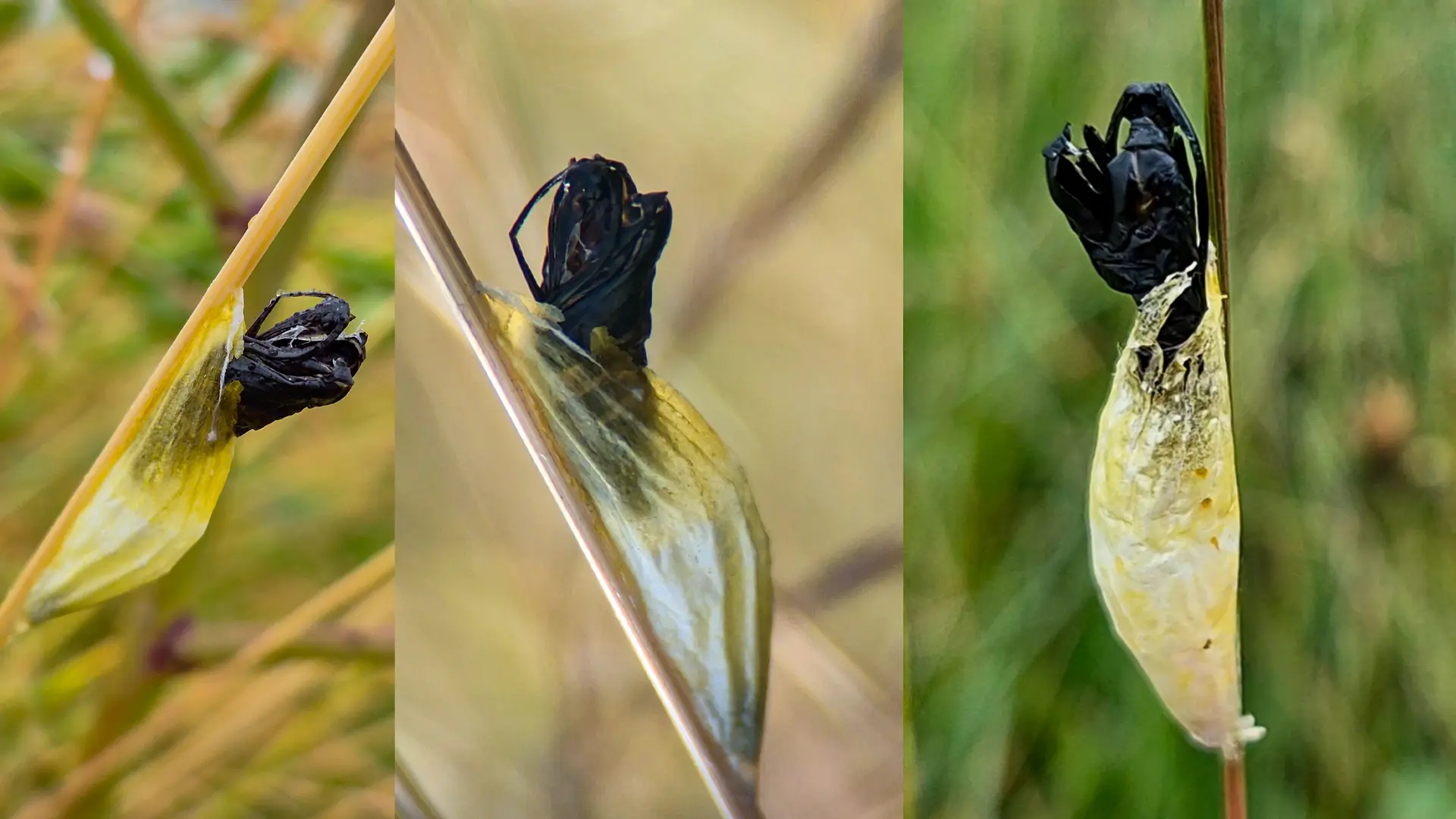
The exuvia remains anchored to the plant stem and the inner yellow silk because it was physically glued to the structure during the caterpillar’s transition into a pupa.
NOTE
Sometimes they can die at this stage, as it is the most vulnerable and difficult transition time.
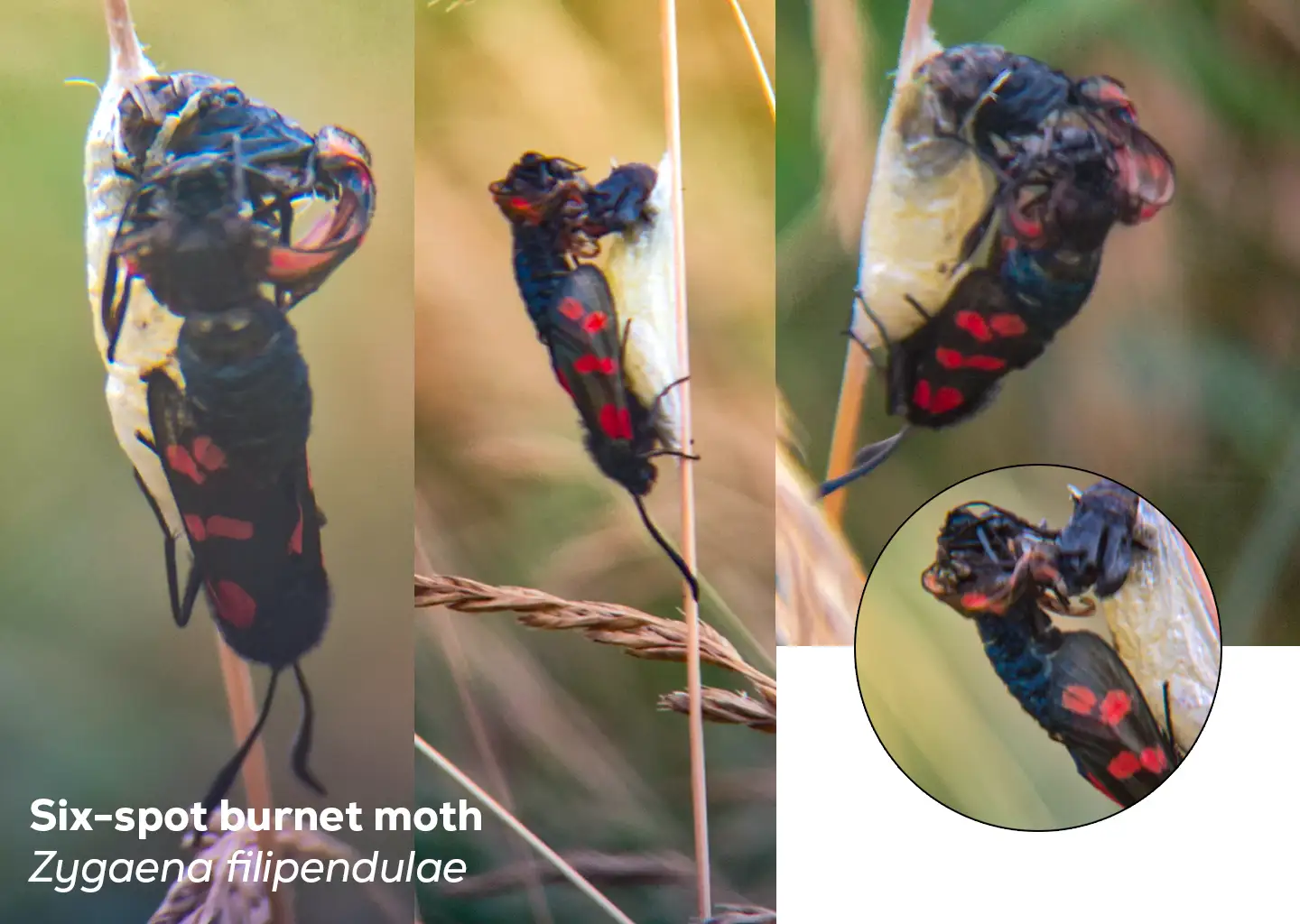
The empty shell stays exactly in place on the yellow silk for several structural and biological reasons.
Attachment to Silk:
Before shedding its final larval skin, the caterpillar creates a sturdy silk mat or structure and cements its rear end (the cremaster) firmly to the plant stem.
When the pupal shell forms and splits open for the moth to escape, this original anchor remains undisturbed.
Safety Post-Emergence:
The emerging moth is incredibly vulnerable. Its new wings are wet, soft, and crumpled. The moth must hang perfectly still to pump hemolymph (insect blood) into its wings and allow them to harden. Leaving the exuvia anchored to the yellow silk provides a stable, secure platform for the moth to hang vertically while its wings dry without folding or tearing.
Structural Composition:
The exuvia is made of chitin, a tough, flexible, and indigestible polymer. Because it is composed of this hard material, the shell does not decompose or blow away easily and will often stay anchored for weeks after the moth has flown off.
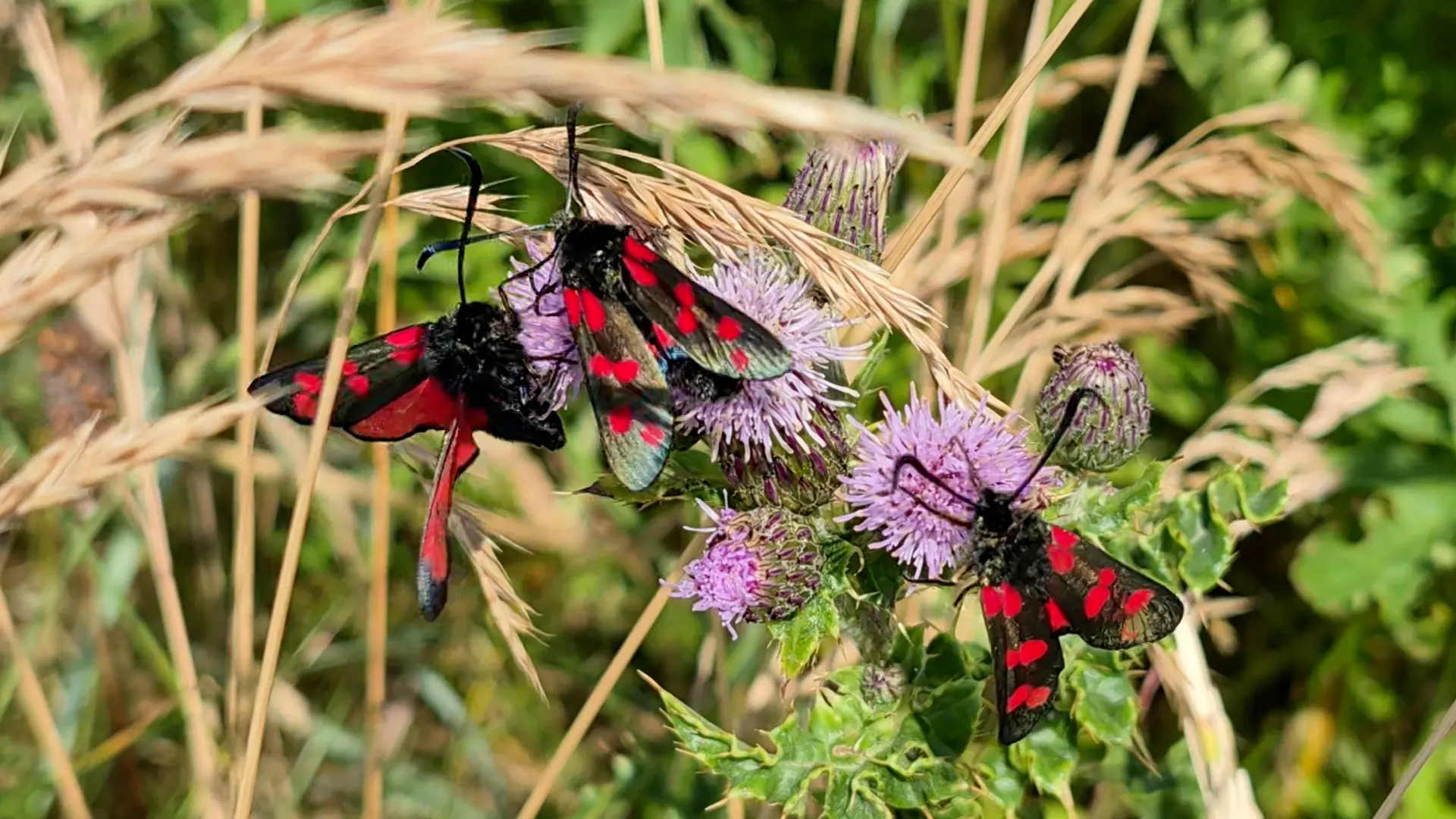
DIET
Their diet is strictly limited:
Adults: They only drink nectar from flowers, such as knapweed, scabious, and thistles.
Caterpillars: They feed exclusively on the leaves of low-growing plants, primarily Bird’s-foot Trefoil
During this project we documented every stage—from caterpillar to cocoon to newly emerged adult—over approximately 45 days of direct observation, revealing one of nature’s most fascinating transformations.
Nature’s Chemical Defence Expert
The Six-spot Burnet is far more than a beautiful insect.
Its caterpillars feed on Bird’s-foot Trefoil and store natural cyanide compounds within their bodies. These chemicals protect both caterpillars and adult moths from many predators.
Their bright red and black colours are a warning signal that says:
“Don’t eat me.”
Scientists call this warning colouration aposematism.
What’s so special about Bird’s-foot?
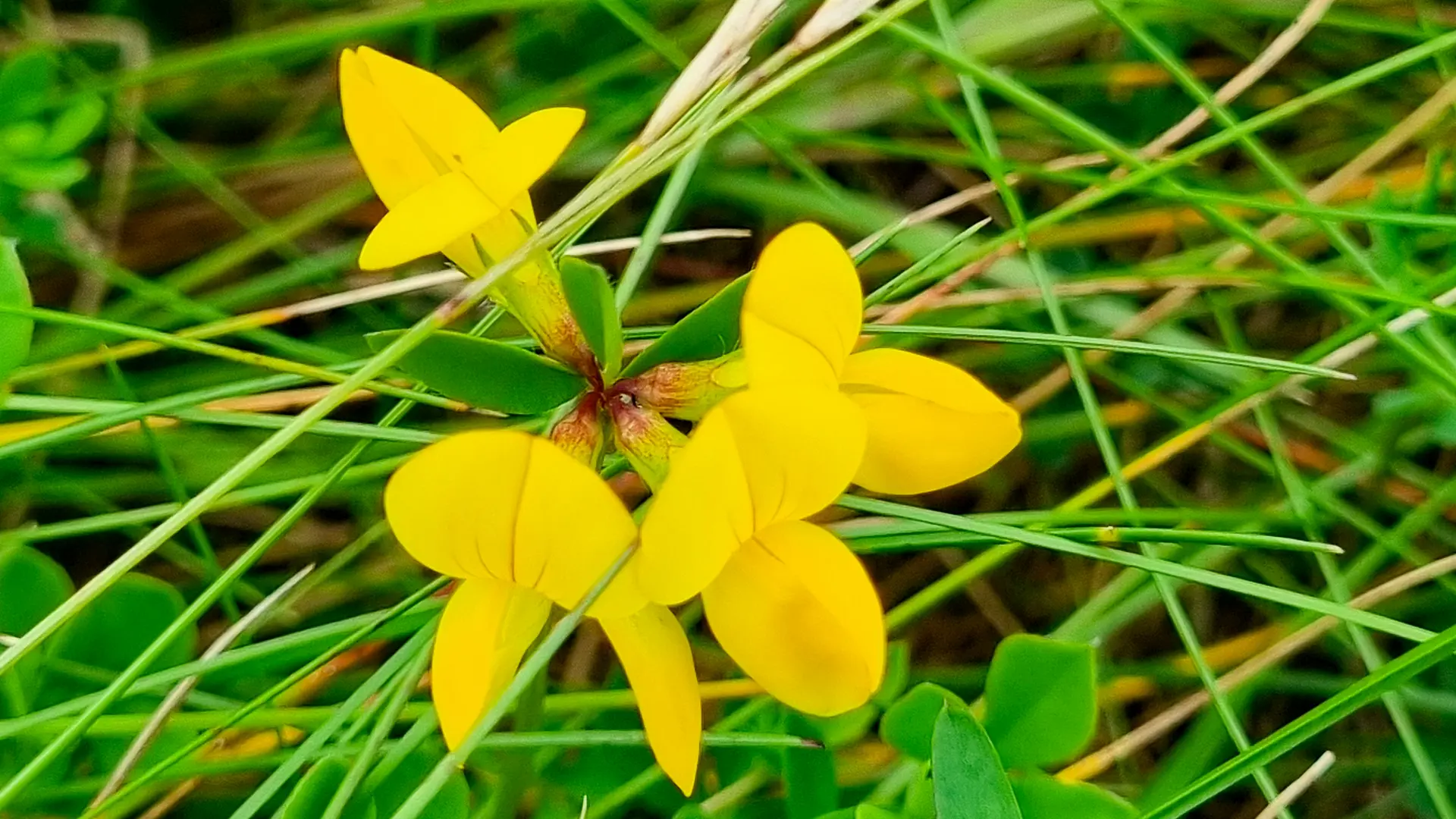
Bird’s-foot Trefoil (Lotus corniculatus) | Crobh éin |
Bird’s-foot Trefoil (Lotus corniculatus) is a much-loved wildflower with bright yellow pea-like flowers that brighten roadsides, grasslands, sand dunes, and stone walls. Its flowers provide nectar for a wide range of pollinators, including bees, butterflies, moths, and flies.
The plant naturally produces cyanide-based compounds that deter most herbivores, making it a safe refuge for the Burnet Moth. Unlike other animals, Burnet Moth caterpillars can eat the plant without harm, storing its toxins in their bodies to protect themselves from predators. They retain these chemical defences throughout their lives, and males even pass the toxins to females during mating to help protect their eggs.
Young shoots have a flavour similar to asparagus, while the sweet, lightly fragrant flowers and slightly bitter leaves are also edible.
Lotus corniculatus (Common Bird’s-foot Trefoil) is highly beneficial for the environment because it is a hardy, nitrogen-fixing legume that naturally restores degraded soil.
It prevents soil erosion on slopes, supports a wide variety of local pollinators with high-protein pollen, and serves as a vital food source for butterfly caterpillars.
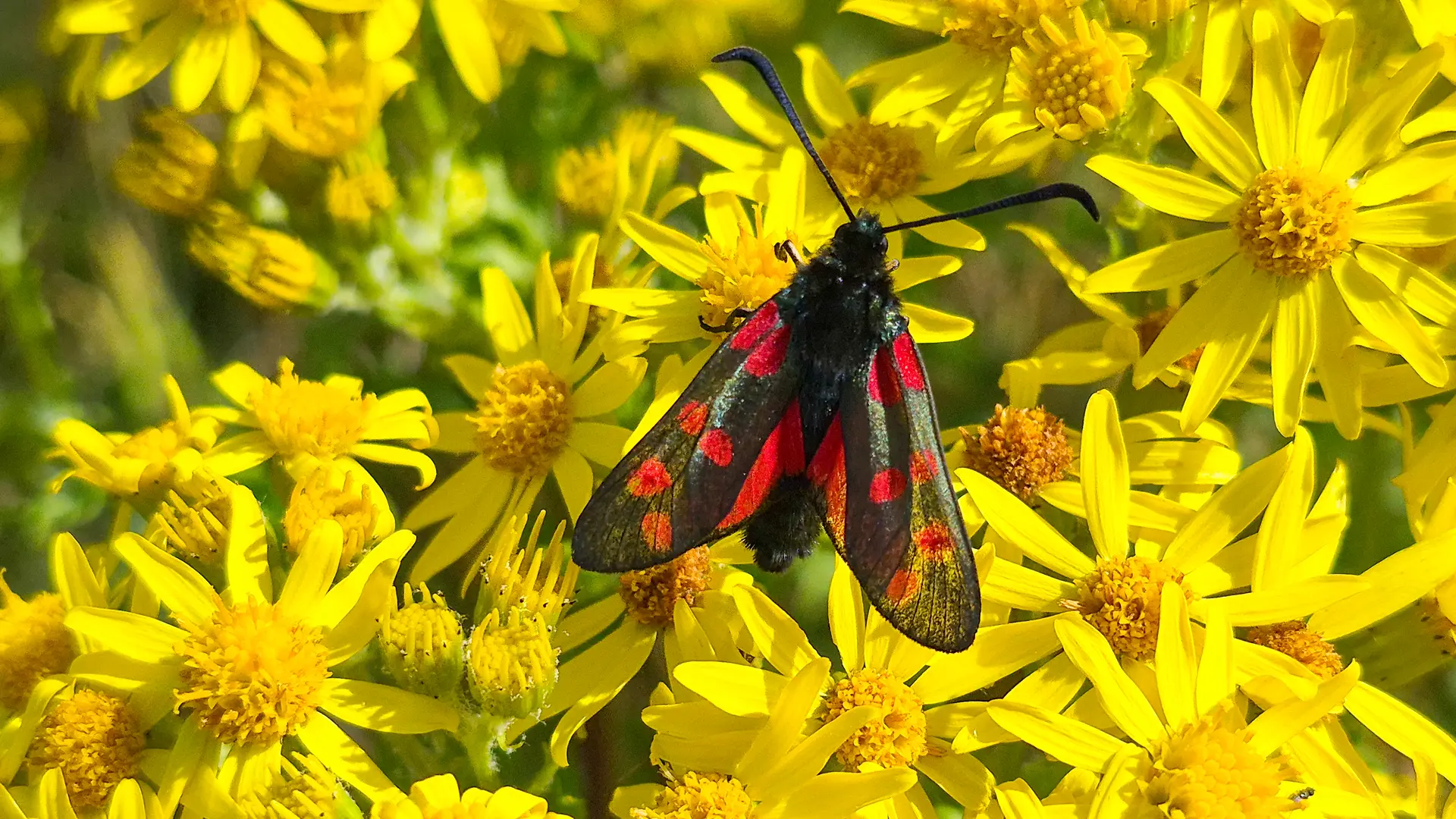
SUMMARY A Fragile Coastal Ecosystem – Every Species Matters
The Six-spot Burnet depends on much more than one food plant.
It needs:
- Wildflowers for nectar
- Bird’s-foot Trefoil for its caterpillars
- Tall grasses for cocoon sites
- Undisturbed vegetation for overwintering
- Warm, sunny coastal grassland
Together these habitats create a delicate web of life where insects, birds, wildflowers and other wildlife depend on one another.
Protecting one species often protects many others.
Citizen Science in Action
Every Observation Counts
This project shows how people can make meaningful contributions to science.
Recording wildlife helps scientists understand where species occur, how habitats are changing and what conservation actions may be needed.
Identifying species is a continual learning process, and citizen science encourages everyone to observe, record and improve their knowledge together.
Every wildlife record submitted helps build a clearer picture of Ireland’s biodiversity.
Protect Our Beaches
The story of the Six-spot Burnet reminds us that healthy ecosystems depend on clean, undisturbed habitats.
By keeping beaches litter-free and protecting native wildflowers, we help countless species survive—from tiny caterpillars to birds, bees and butterflies.
Every visit to Grattan Beach is an opportunity to appreciate and protect one of Galway’s remarkable coastal habitats.
Please help keep our beaches clean, do not litter, stay on the paths, do not walk across the grassland.
Nature depends on all of us
ABOUT
A Grattan Beach Salthill Biodiversity Survey, Inspired by the #WetlandsForLife Campaign
Featuring the Six-spot Burnet Moth, A Biodiversity Story from Grattan Beach
What began as a small wetland bird survey inspired by the Wetlands for Life campaign has grown into a wider biodiversity study of Grattan Beach. Our aim is to better understand the plants, insects and birds that depend on this fragile coastal habitat and identify the challenges they face.
Over two months, we recorded more than 40 species, which were all submitted to the National Biodiversity Data Centre.
This citizen science project demonstrates how local observations can contribute to protecting biodiversity for future generations.
Survey Highlights
Over 40 species recorded
Survey area: 5,960 m²
Survey distance: 400 metres
Records submitted to the National Biodiversity Data Centre
.