
Ireland’s coastal treasure: the native oyster
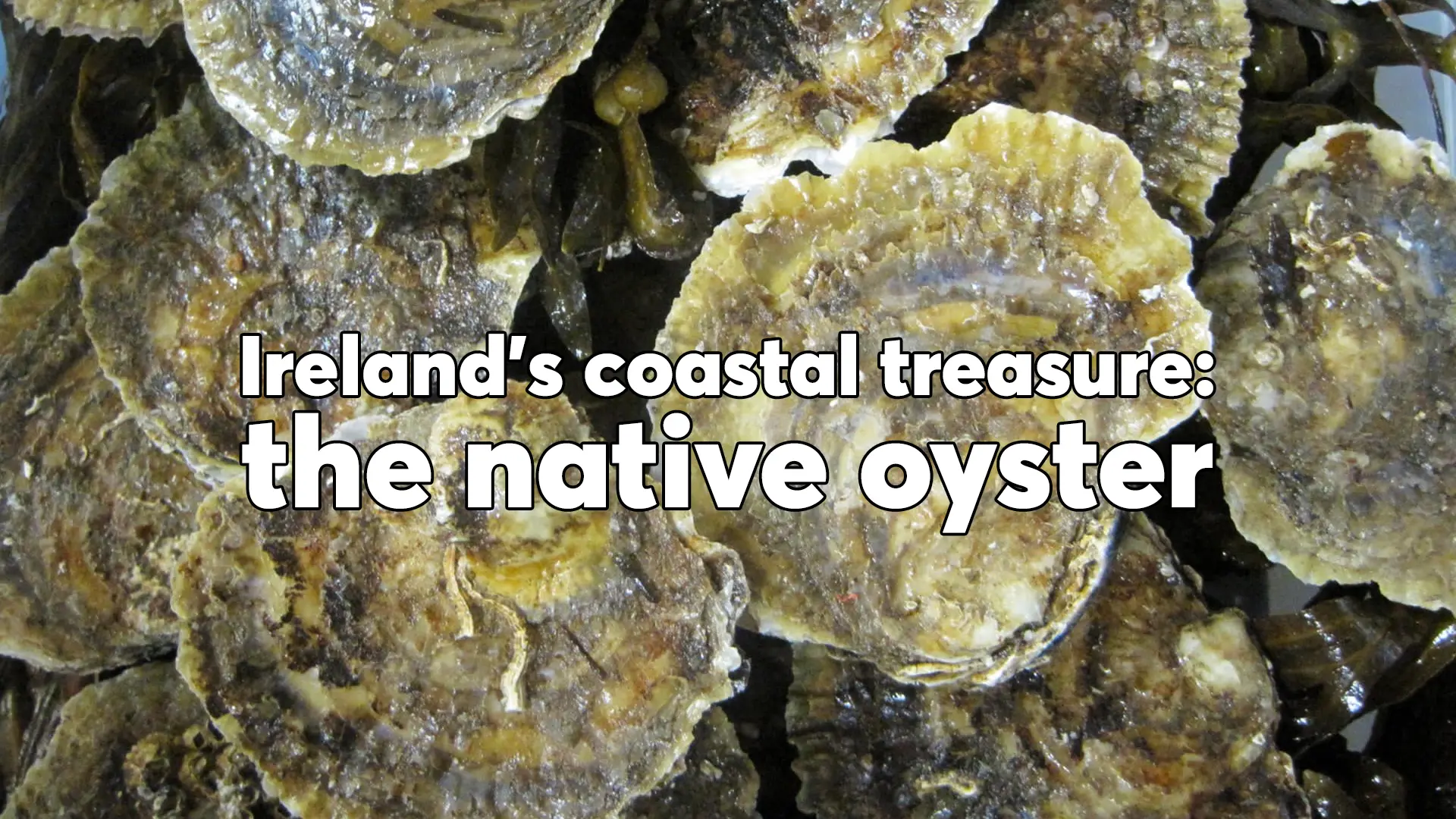
What if we told you that one of Ireland’s most important coastal species could fit in the palm of your hand?
The native oyster (Ostrea edulis) might look like nothing more than a shell on the seabed, but this coastal engineer plays an important role in our aquatic ecosystems and has been part of Ireland’s coastal story for centuries.
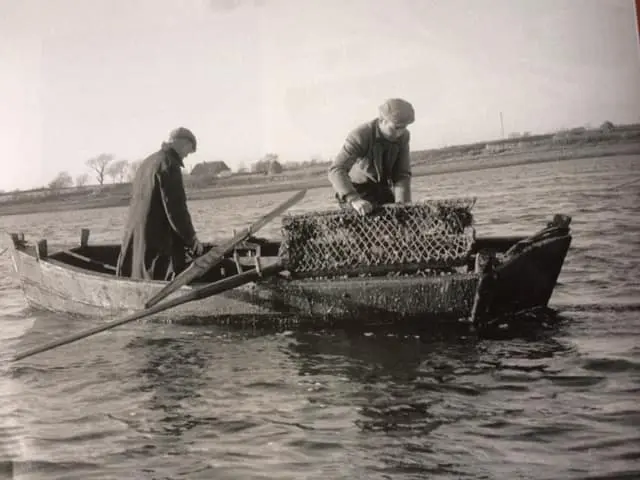
History of the Native Oyster
Ireland’s native oyster has been part of our coastal story for thousands of years. Oysters were harvested and eaten by coastal communities as far back as the Mesolithic period (specifically c. 8000 BC to 4000 BC).
Naturally occurring oyster beds were once found in many of Ireland’s bays and estuaries, and by the 18th century, oysters had become an important part of coastal communities and the Irish economy.
However, this abundance did not last. Increasing commercial demand and improved transport led to intensive harvesting, while pollution, harsh winters and disease placed further pressure on native oyster populations.
By the late 19th and early 20th centuries, many natural oyster beds had declined dramatically, threatening the survival of Ireland’s native oyster.
But this isn’t where the story ends.
Today, efforts are underway to better understand, protect and restore native oyster populations around Ireland. By restoring native oyster beds, we have an opportunity not only to bring back a species that is an important part of Ireland’s natural and cultural heritage, but also to help rebuild the wider coastal ecosystems they support.
Why Does Oyster Restoration Matter?
But why does restoring the native oyster matter? To understand that, we need to look beyond the oyster itself and at the role it plays within the wider ecosystem.
Native oysters are what we call ecosystem engineers. As they grow together, they build oyster beds and reefs on the seafloor. They provide a range of ecosystem services, from creating shelter and habitat for other marine organisms to removing particles from the water as they feed. This means that a healthy oyster bed can support much more than just oysters; it can become a thriving habitat for a whole community of marine life.
And this is why conservation and restoration are so important. By protecting the native oysters we have left and restoring suitable habitats, we have the opportunity to rebuild these ecosystems and bring back some of the ecological functions that have been lost.
So, the next time you see an oyster, remember; beneath that unassuming shell is a species with thousands of years of Irish history, an important role in our coastal ecosystems, and a future that is still ours to shape, hold and taste.
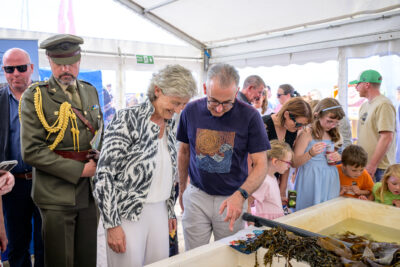
Who is responsible for restoration in Galway Bay?
Cuan Beo
Native Oyster Restoration
Since its establishment, Cuan Beo has identified that ecosystem services delivered by the native oyster fishery are intrinsically linked to the quality of life, environment, economy, and heritage around South-East Galway Bay. The value of the native oyster fishery in Galway Bay therefore extends beyond the value of provisioning services, and into regulatory, and indeed cultural services. The survival of the native oyster fishery is linked to the condition of the catchment and the water quality that is discharged into the coastal environment. With this importance of the native oyster fishery in mind, Cuan Beo, through collaboration with the Marine Institute, Bord Iascaigh Mhara, and the Clarinbridge Co-Op, have been actively restoring native oyster beds and reefs in Inner Galway Bay since 2017, thus far increasing the native oyster population by an estimated 20 million.
.