
Aquarium Book Club, December 2025

December Good Reads…SHARKS
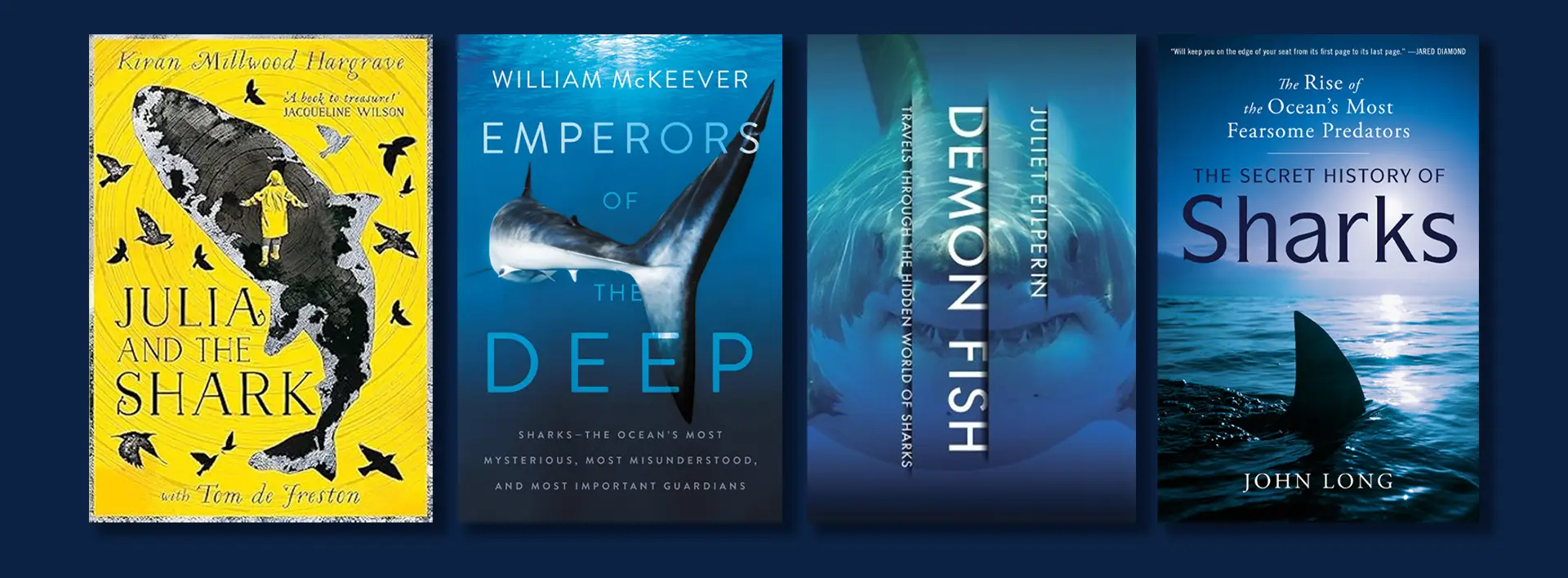
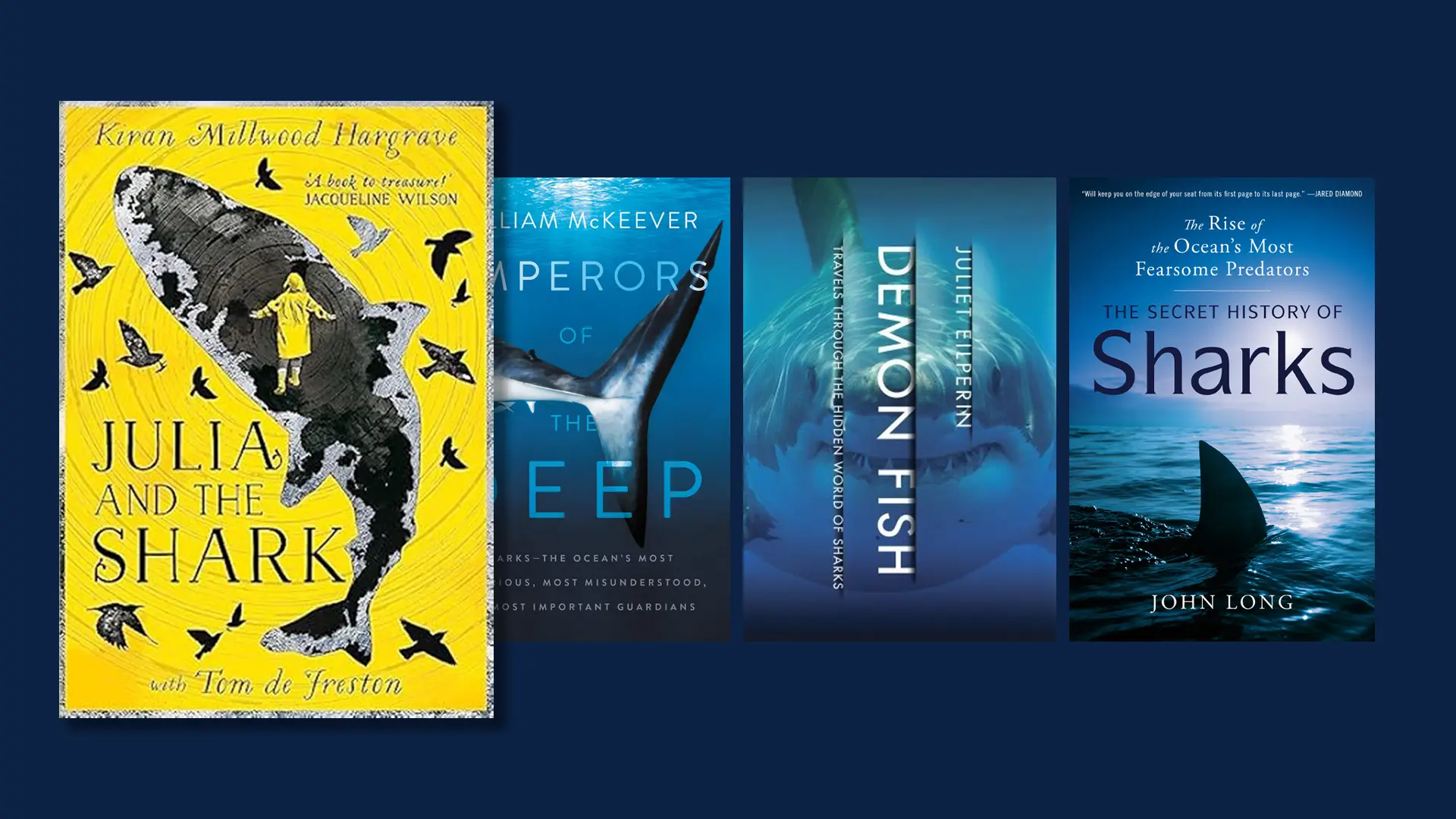
Kiran Millwood Hargrave’s middle-grade novel Julia and the Shark is set on the remote Shetland island of Unst. The story follows Julia, whose scientist mother is hunting the elusive Greenland shark, while her father works as the lighthouse keeper. Throughout the book it becomes clear that Julia’s mother is suffering from debilitating depression. Through Julia’s eyes you see what effect depression has on the whole family and the difficulty she has supporting her mother. The Greenland shark becomes a symbol of a goal and hope, and something that both Julia and her mother hold onto.
Millwood Hargrave has a beautiful writing style, which is complimented by the beautiful artwork of her partner Tom de Freston. It is a very atmospheric book in which the setting and the elusive shark play just as important a role as Julia and her family.
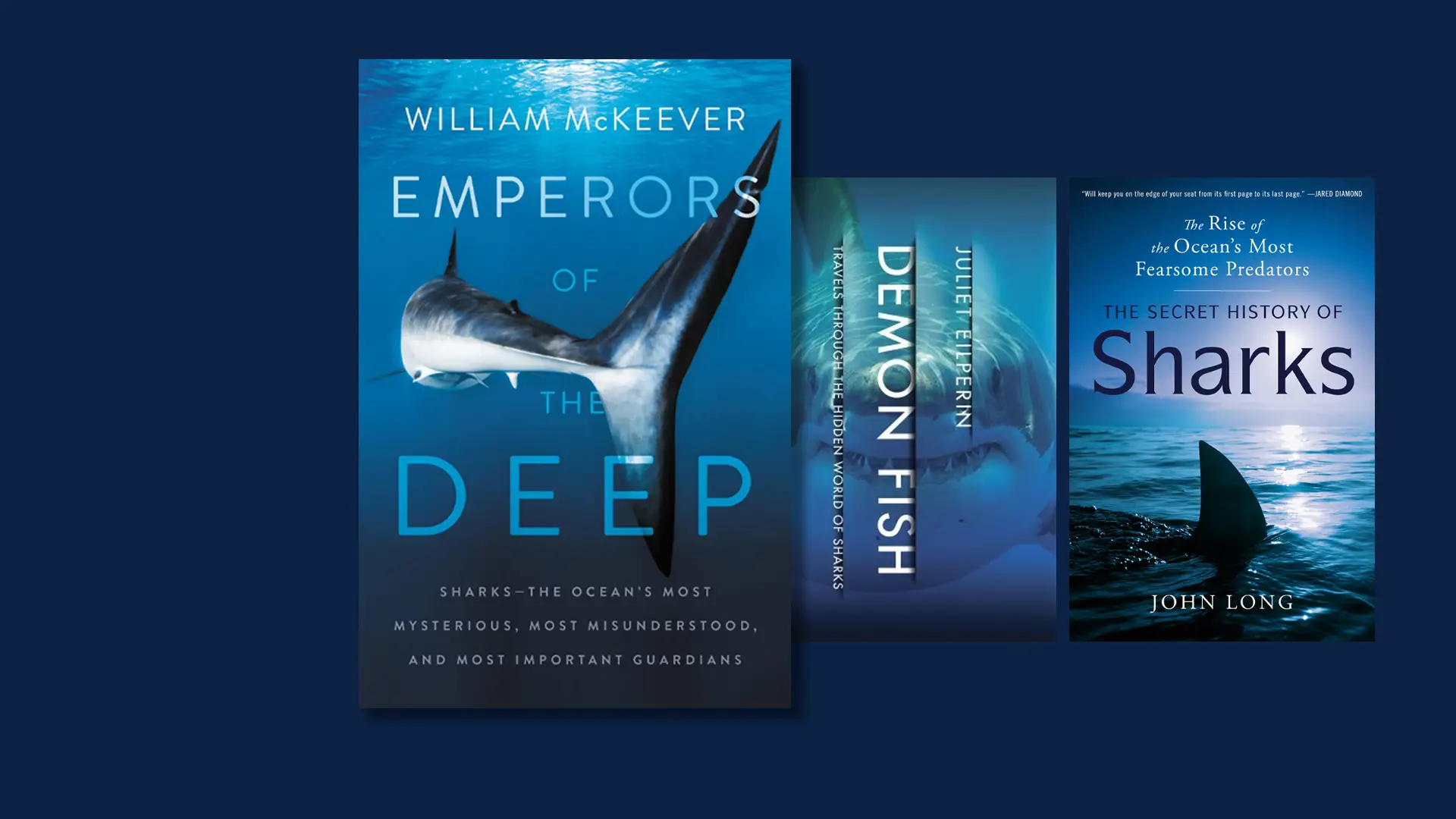
In Emperors of the Deep, author William McKeever tries to shift the public perception of sharks, -that they are nothing more than “merciless killing machines”- by looking at shark biology and behavior. He reveals that sharks are complex, intelligent, and extraordinarily sophisticated creatures, and he emphasizes their fundamental role as keystone species essential for the overall health of the world’s oceans.
McKeever offers detailed insights into several distinct species, for example the mako shark -the fastest shark on the planet and the whale shark -the largest fish in the sea. He highlights the variety of adaptations and the specific place they hold in the ocean.
Throughout the book, McKeever repeatedly mentions the devastating impact of human activity on these animals, like overfishing and the devastation of habitat destruction.
One of the book’s greatest strengths lies in its ability to shift the reader’s perspective, which McKeever achieves by highlighting the ecological significance and complex lives of sharks. Their existence stretches back over 400 million years—a timeline that predates the dinosaurs by over 200 million years! This should not only spark our curiosity but must also serve as a catalyst for initiatives to protect their well-being and ensure their continued survival on this planet.
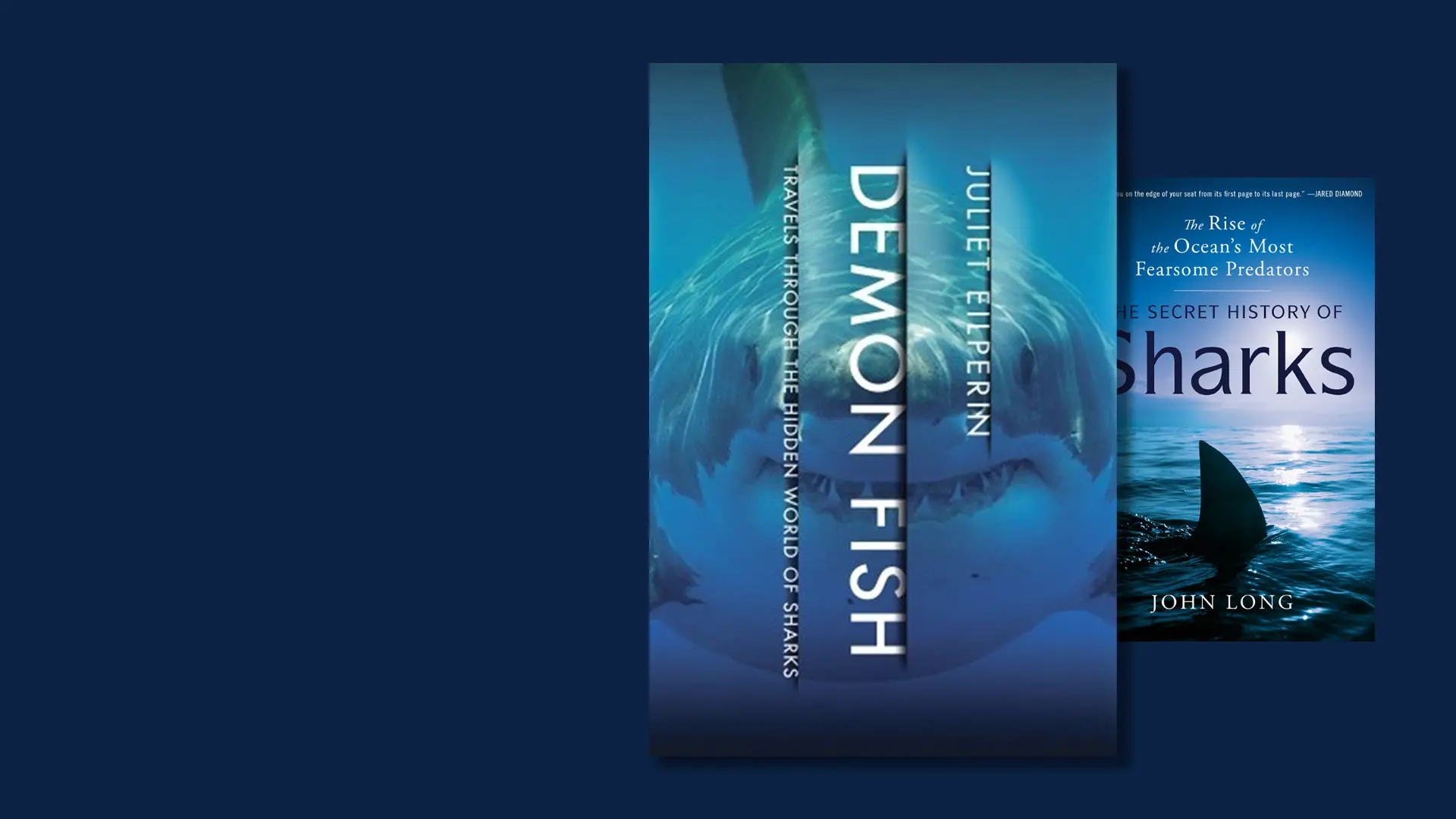
In Demon Fish: Travels Through the Hidden World of Sharks former Washington Post reporter Juliet Eilperin examines the economic, cultural, and political forces shaping the future of sharks.
She describes the different practices that threaten sharks and she speaks to conservationists, fishermen, scientists, and communities with spiritual ties to sharks to get a well-rounded view on the importance of these animals.
She doesn’t shy away from highlighting the difficult choices that need to be made regarding the ocean. She for example acknowledges the economic realities of the shark trade while passionately advocating for shark preservation. She discusses the devastating trade in shark fins and explores sustainable options for the future with experts and stakeholders. She also visits places where there are restricted fishing laws and compares this with areas in the ocean without these limitations. The result is an honest look at marine resource management and conservation.
I thoroughly enjoyed this book and learnt so much about sharks viewed from a human perspective and that these animals are intricately connected to us. Reading about all the people campaigning for sharks makes me optimistic that if we want, there is a lot we can do to make sure these animals stay around for centuries to come.
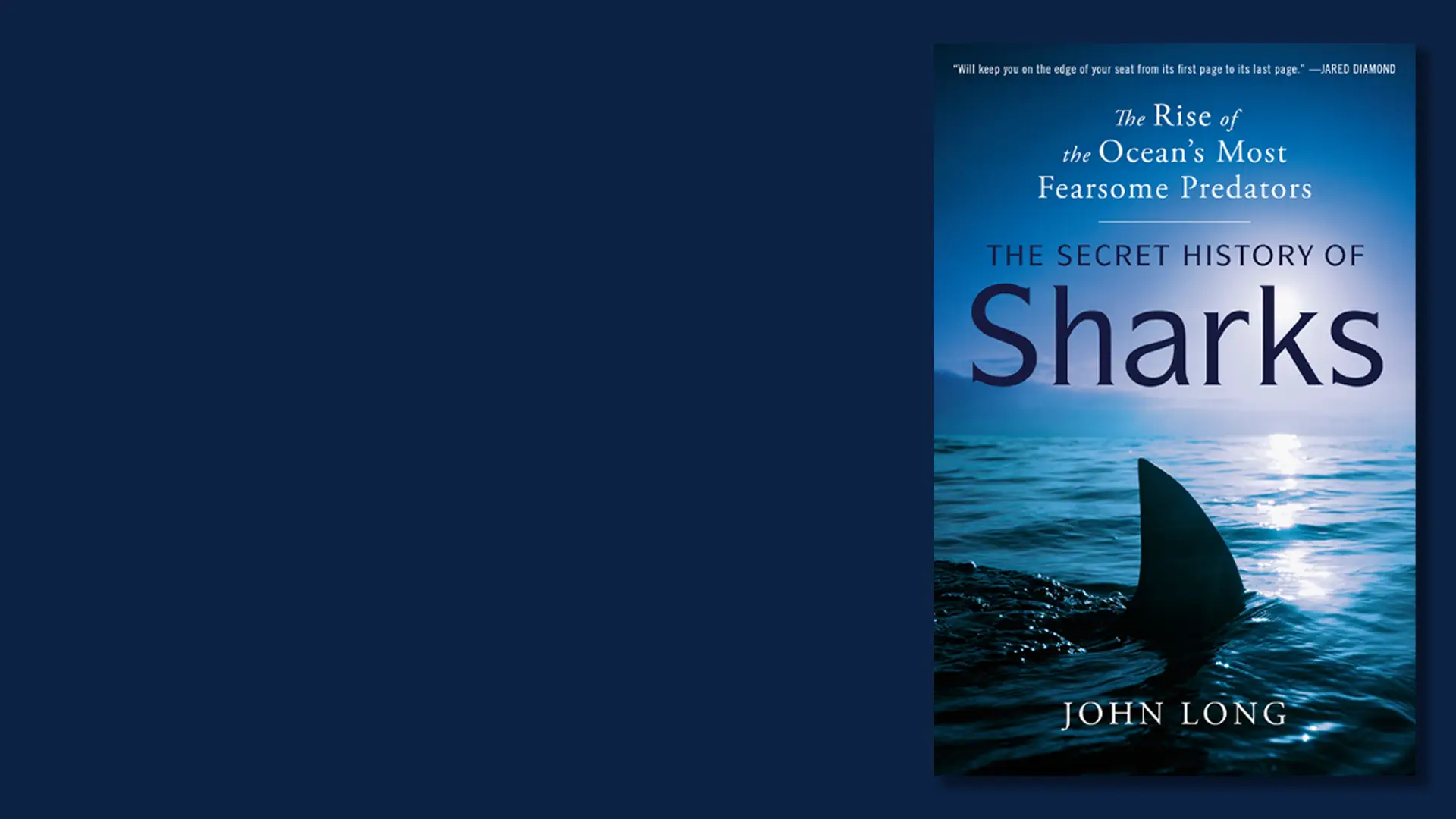
John Long’s The Secret History of Sharks traces the 450-million-year evolutionary journey of sharks. More than just natural history, the book is almost like a detective story, where we get to have a close-up view of the work of a paleontologist, reconstructing the lives of ancient animals from fossil evidence.
Long describes the diversity and bizarre nature of prehistoric shark forms, such as sharks with strange, anvil-like structures on their backs, or those possessing “tooth whorls”—coiled rows of teeth that spun like buzzsaws in the creatures’ mouths. Of course, Long also describes the evolution of the Megalodon, the largest shark to have ever lived, going into the reasons for its massive size, predatory habits, and eventual extinction.
The writing is engaging and accessible, a combination of science with captivating storytelling. This book is a must for everyone interested in evolution. It is densely packed with up-to-date information on current fossil finds and research.
It is great to dip in and out of, and I will definitely be returning to this book if I am looking for any information on any specific prehistoric shark.
Next month we will be looking at the issue of climate change and conservation, and, in line with ‘New Year’s Resolutions’, what it is we can do ourselves to protect our planet.
The books I will be reading are The World is Blue by Sylvia Earle, Climate Worrier by Colm O’Regan, What the Wild Sea Can Be by Helen Scales and the Young Adult novel Wider than the Sea by Serena Molloy.
.