
Discovery of the Year, Springtails of Salthill
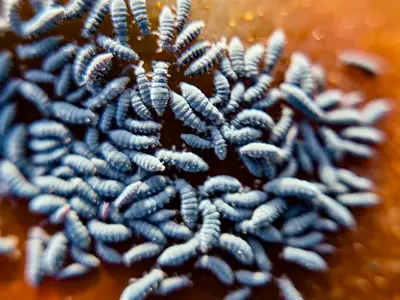
The Springtails of Salthill
The story of the discovery and what we learned about this new pioneer species on Grattan Beach, Salthill.
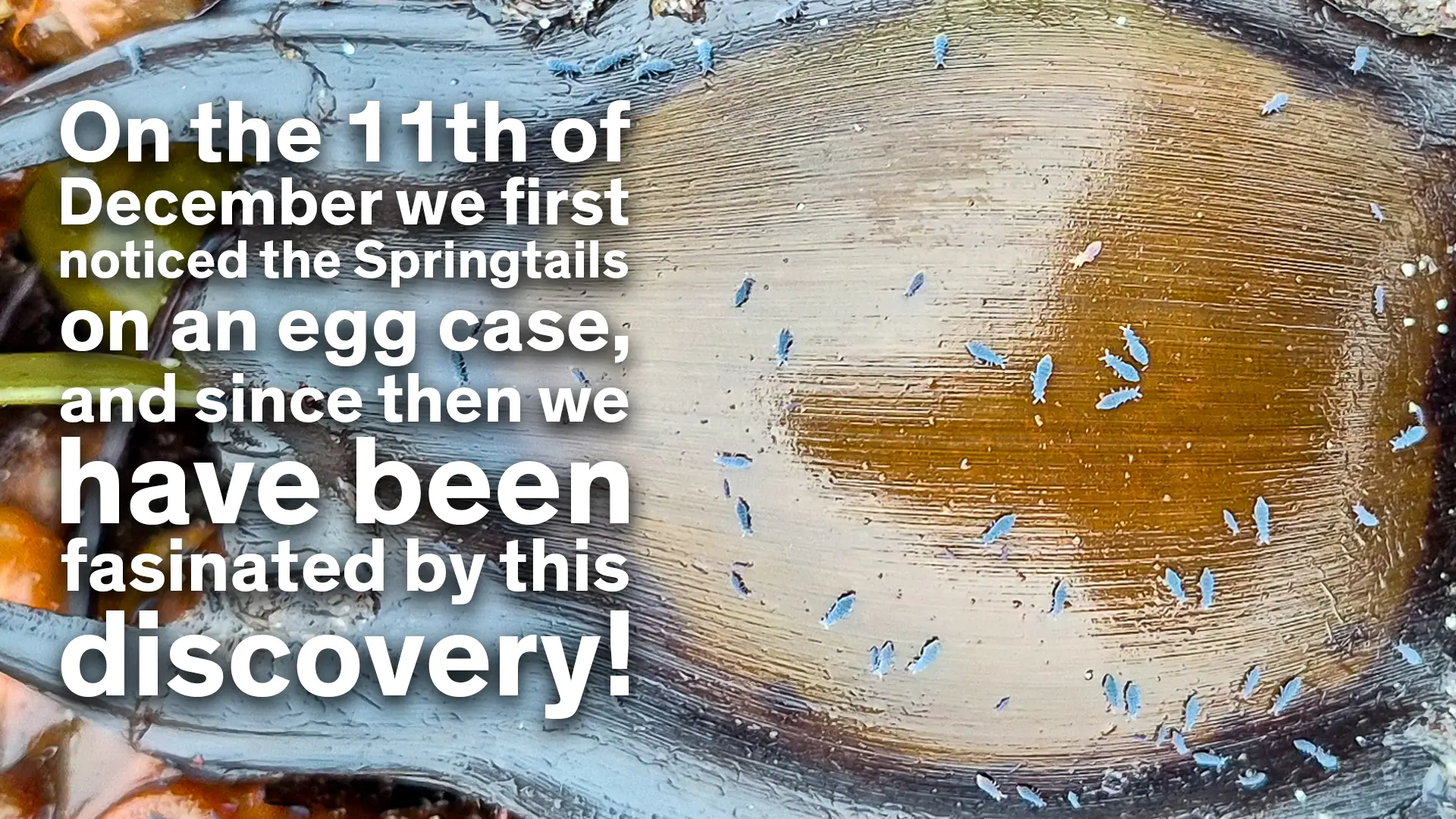
Explore Your Shore! An amazing discovery awaits
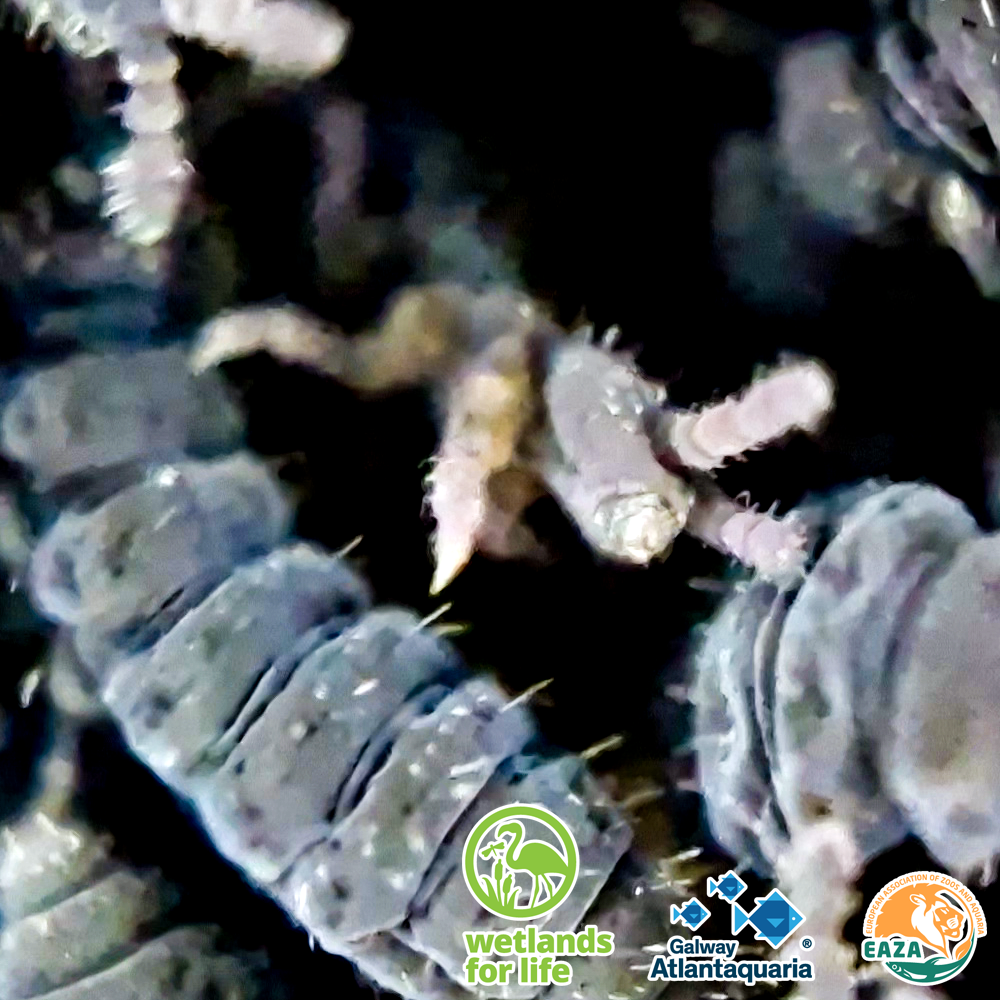
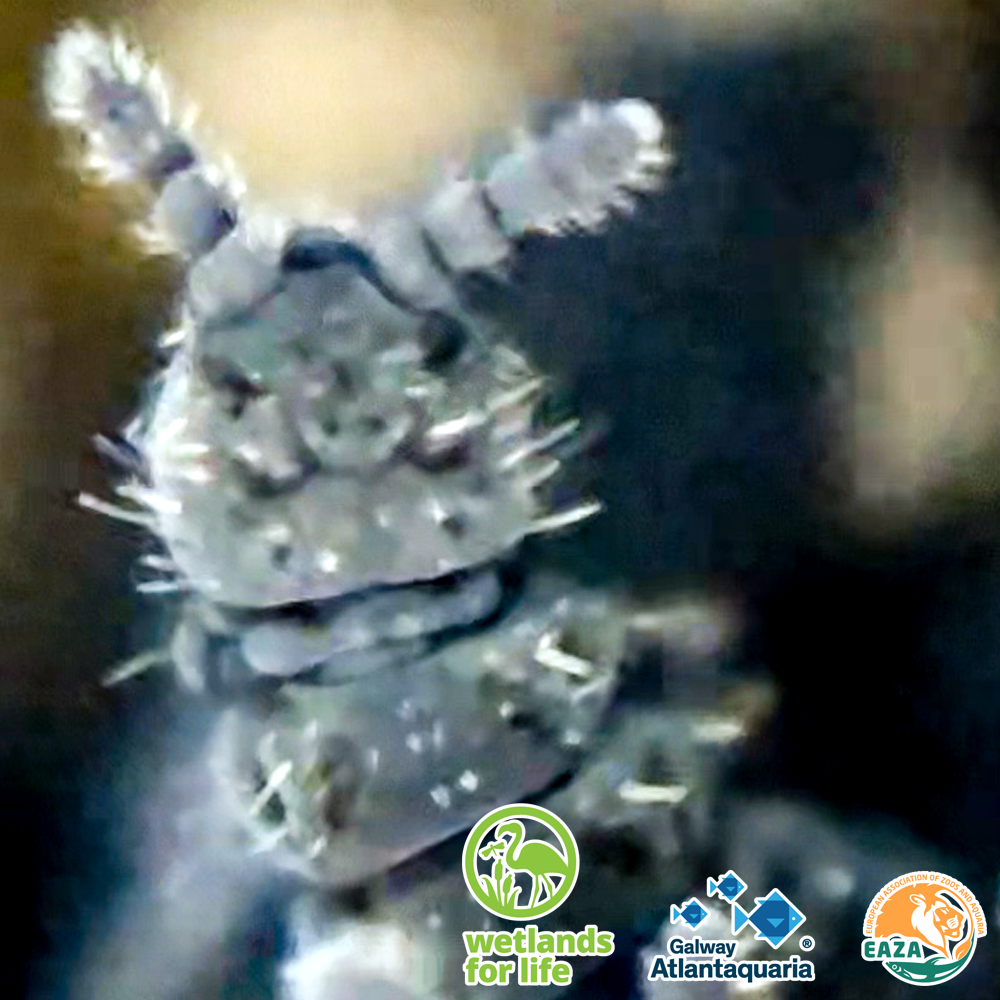
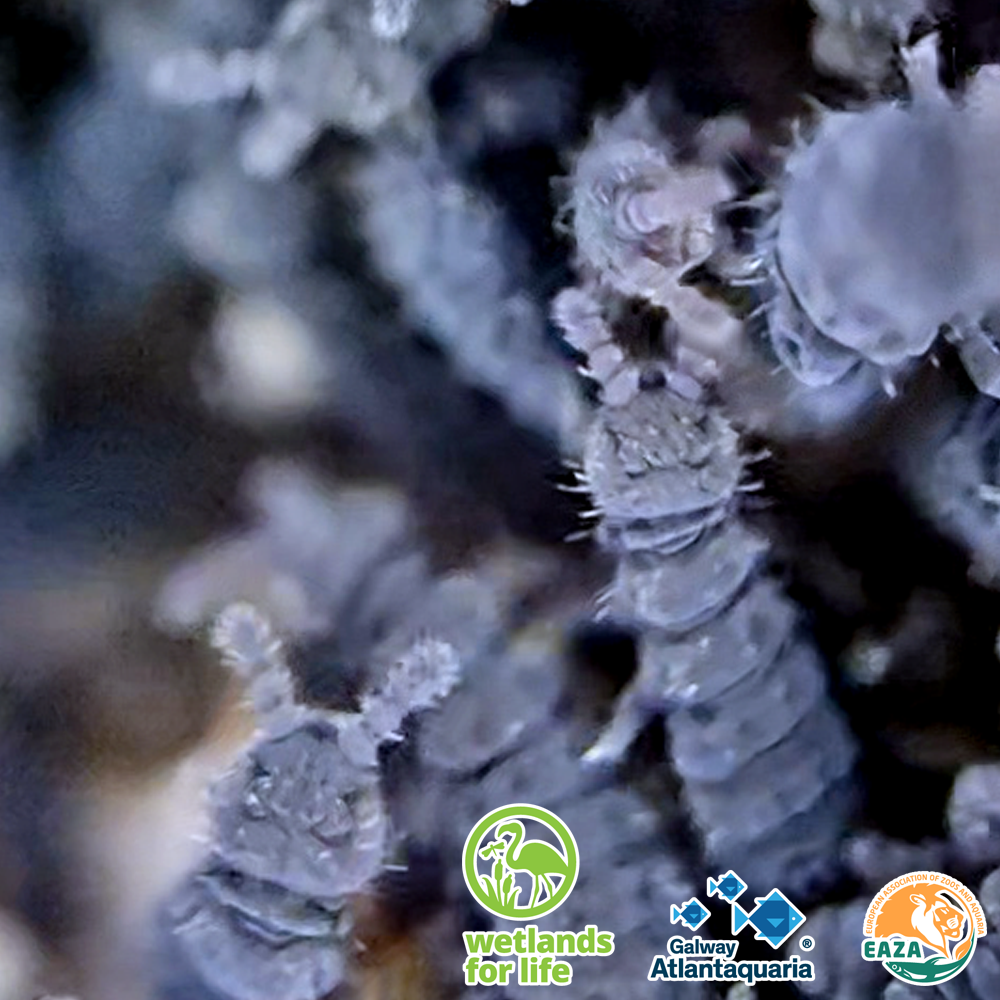
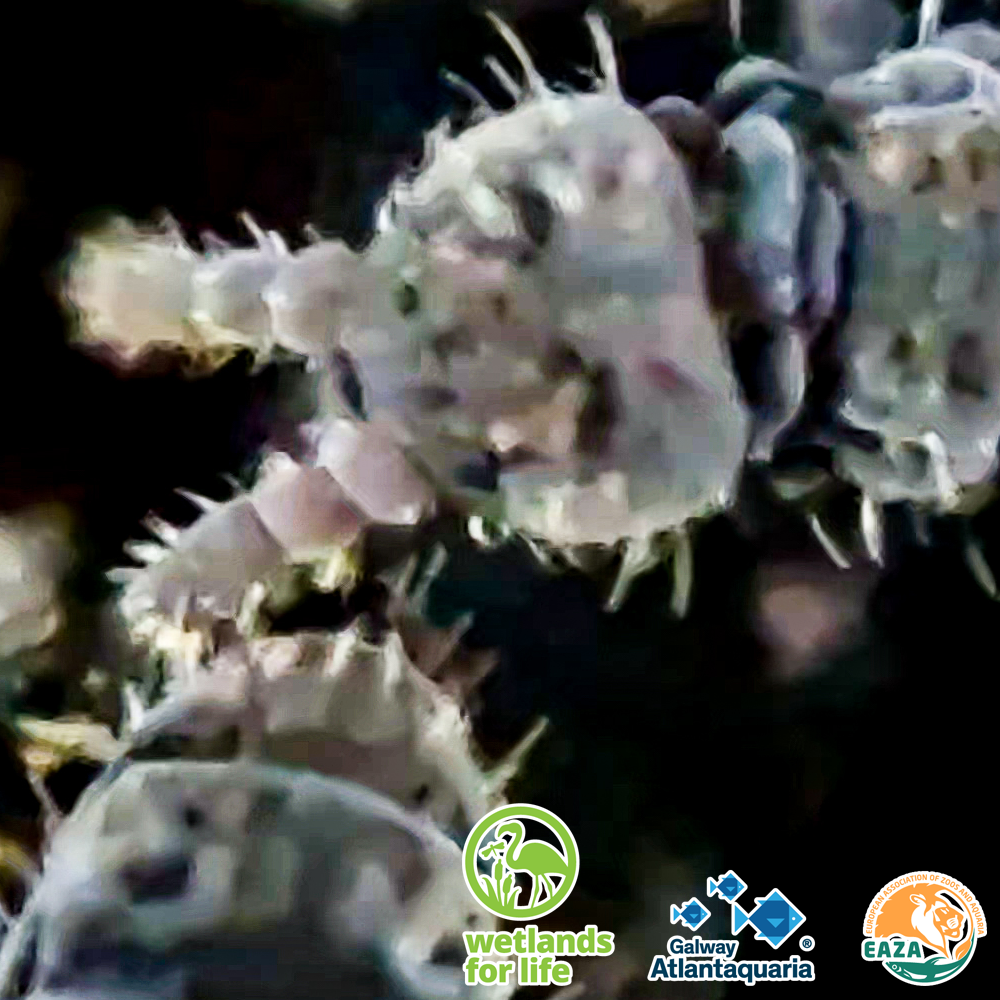
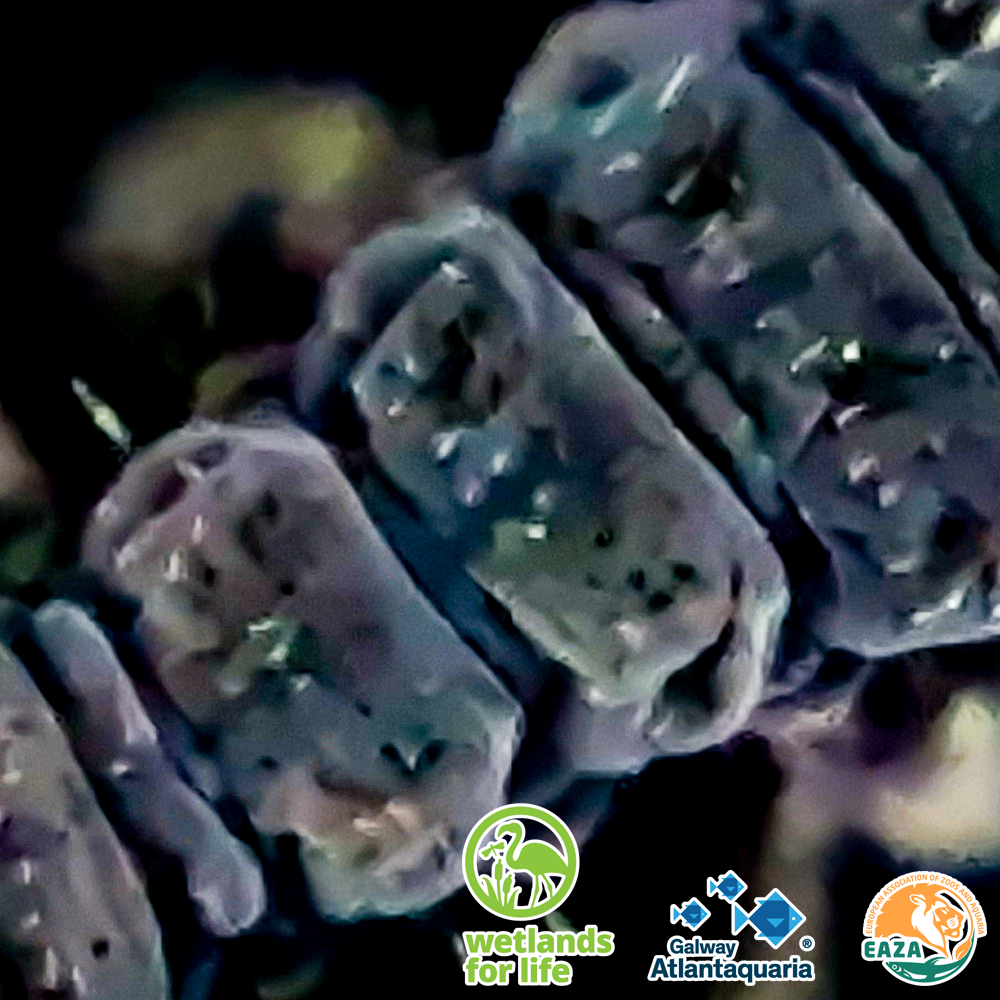
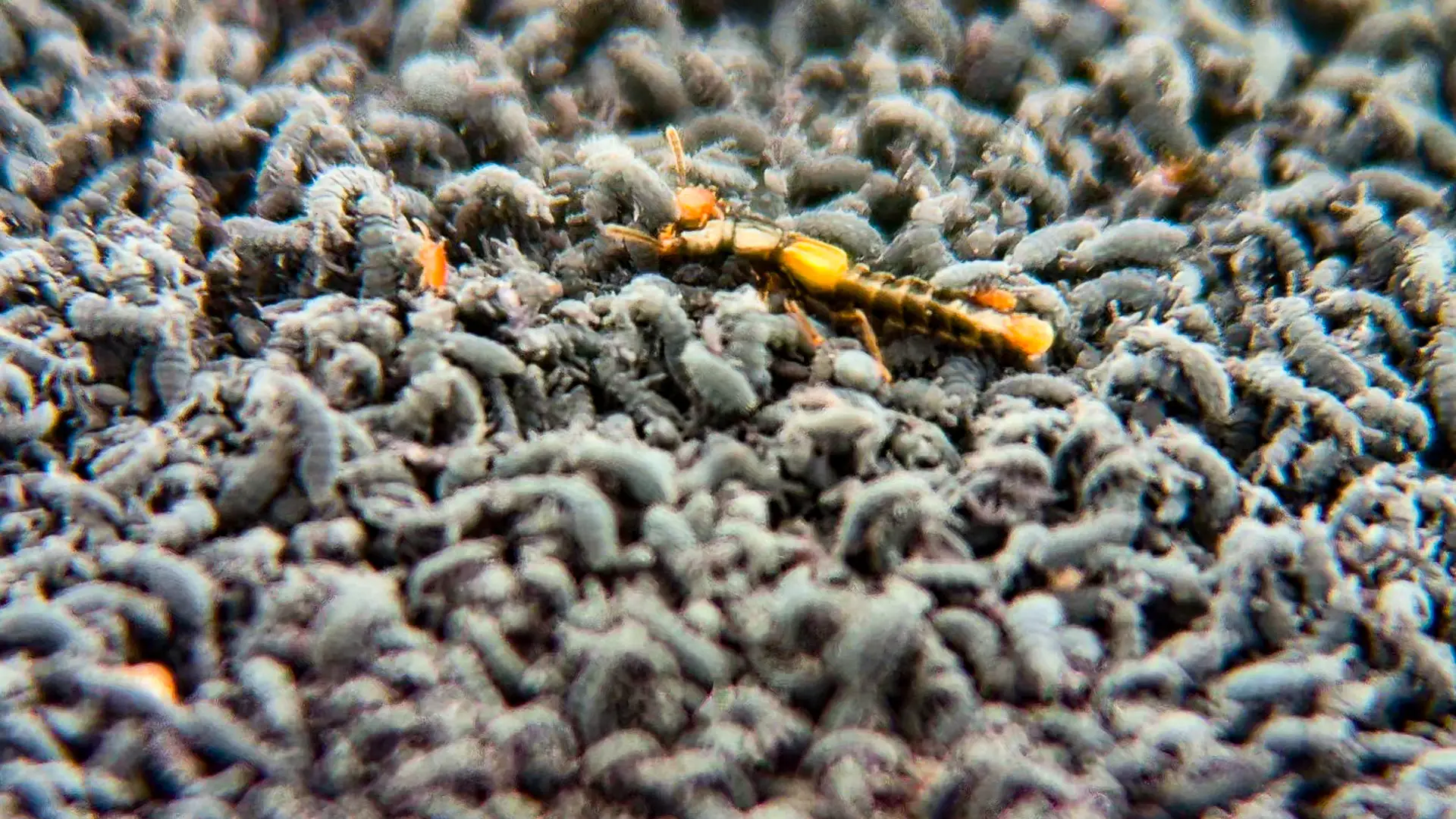
On the 11th of December 2025, while recording egg cases washed ashore on Grattan Beach, Salthill (Galway), we noticed a tiny blue insect moving across one of the cases. Using a clip-on micro lens, we were delighted to discover that it was a marine springtail (or so we thought).
Our first instinct was to identify the species as Anurida maritima, commonly known as the seashore or rock springtail. However, this raised an immediate contradiction—Anurida maritima does not jump, while the individuals we observed clearly did.
This marked the beginning of an intriguing mystery.
At the same time, we learned that the National Biodiversity Data Centre had been receiving new records of similar springtails across Galway, suggesting a broader regional occurrence.
Key questions emerged
How did they arrive on Grattan Beach?
How do they feed, shelter, and survive in this environment?
Can you IDENTIFY? — Update, we are getting some fantastic help and support from Dr. Anne Marie Power, from the University of Galway. They are assisting with some ID KEYS and Imagery Support.
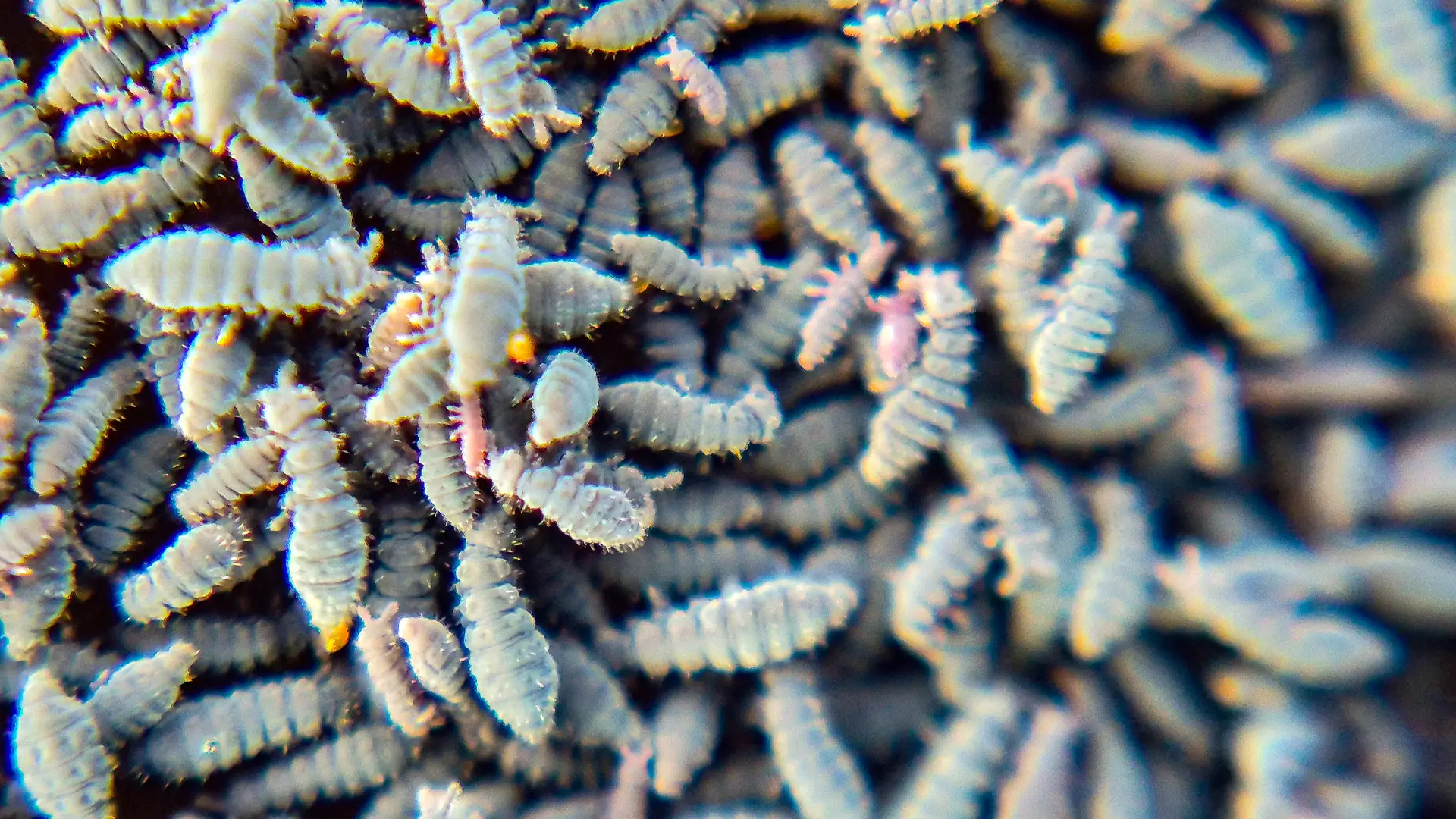
Accurate identification is challenging and requires chaetotaxy—the detailed counting of specific bristles (setae) on the legs. Unfortunately, we do not currently have the equipment required for this level of analysis.
To help resolve this, Steve Trewhella—a respected British naturalist, underwater photographer, and author—kindly offered to examine specimens for identification. We are grateful for this offer, but working out transportation and other issues.
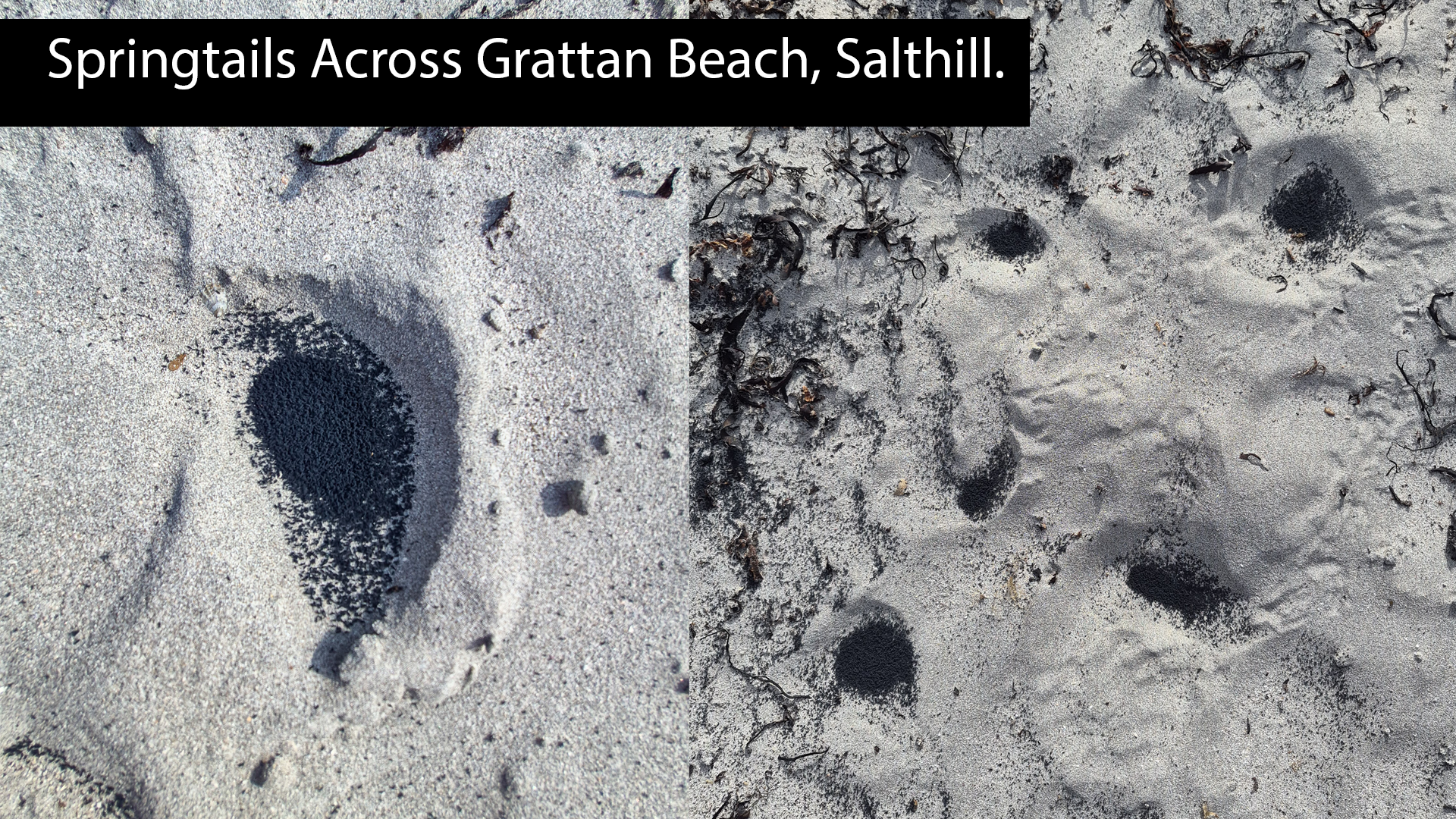
We took many photos of the Springtail sp. in the hollow holes across Grattan Beach, Salthill. (See the PDF Below)
What Can You Tell Us?
What We Know So Far – Caveat — Based on Observations and limited research
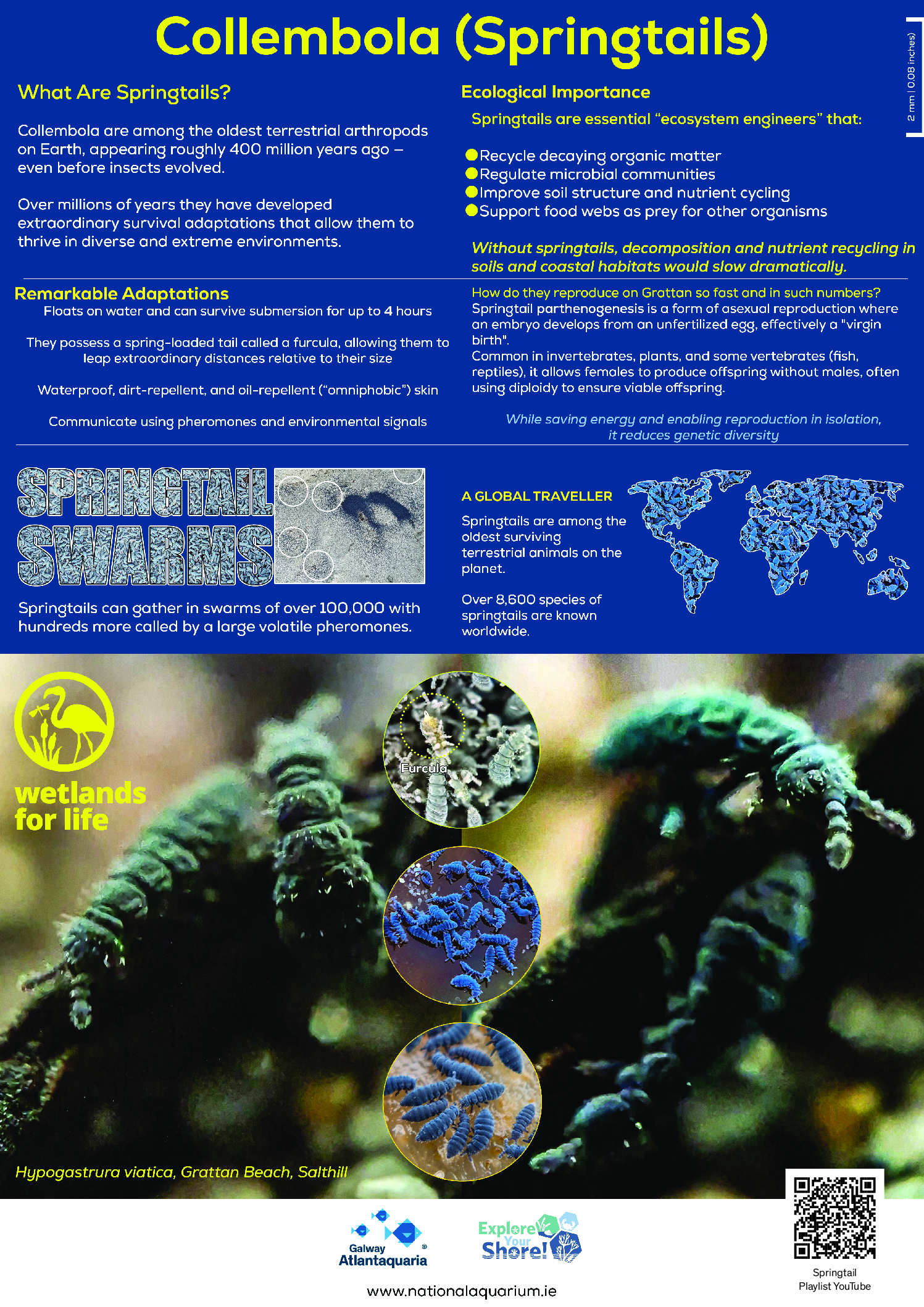
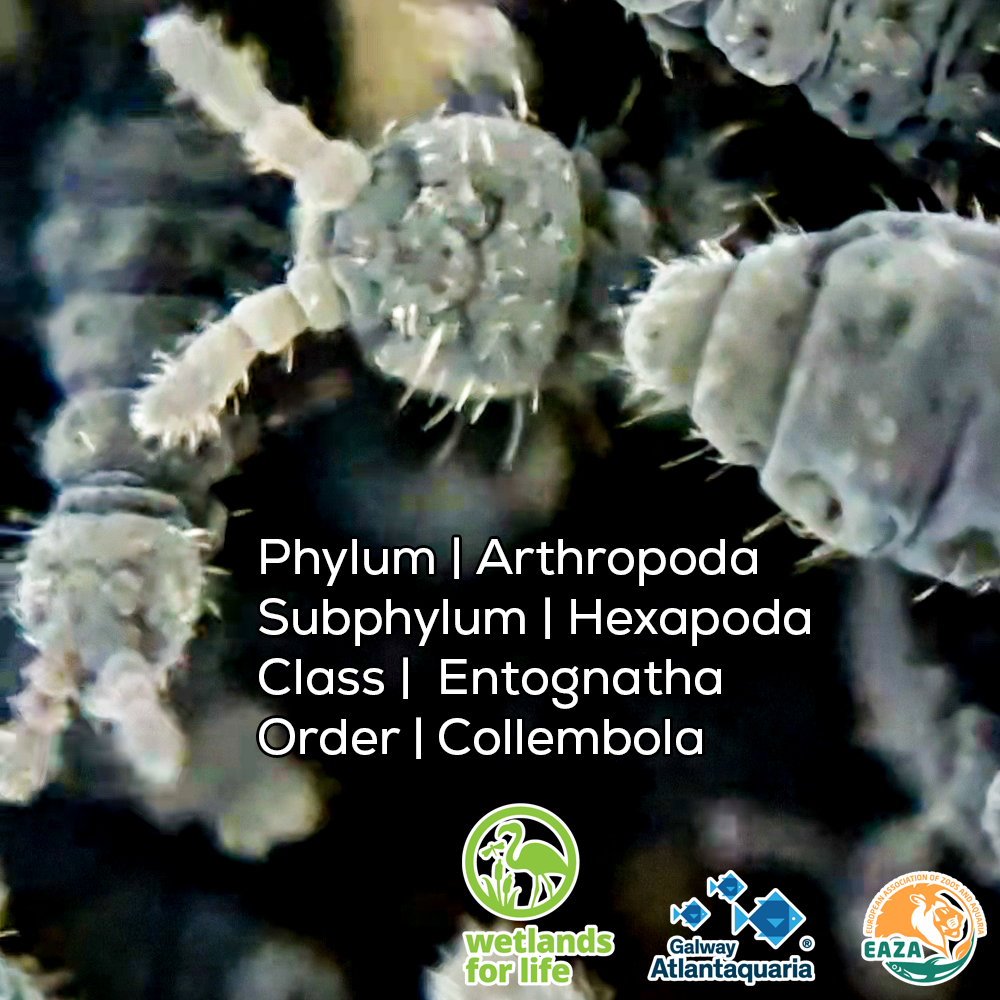
At present, we can confidently say that this species belongs to the order Collembola (springtails). These organisms are:
Small, wingless arthropods (an invertebrate animal of the large phylum Arthropoda, such as an insect, spider, or crustacean.)
Typically 1–6 mm in length
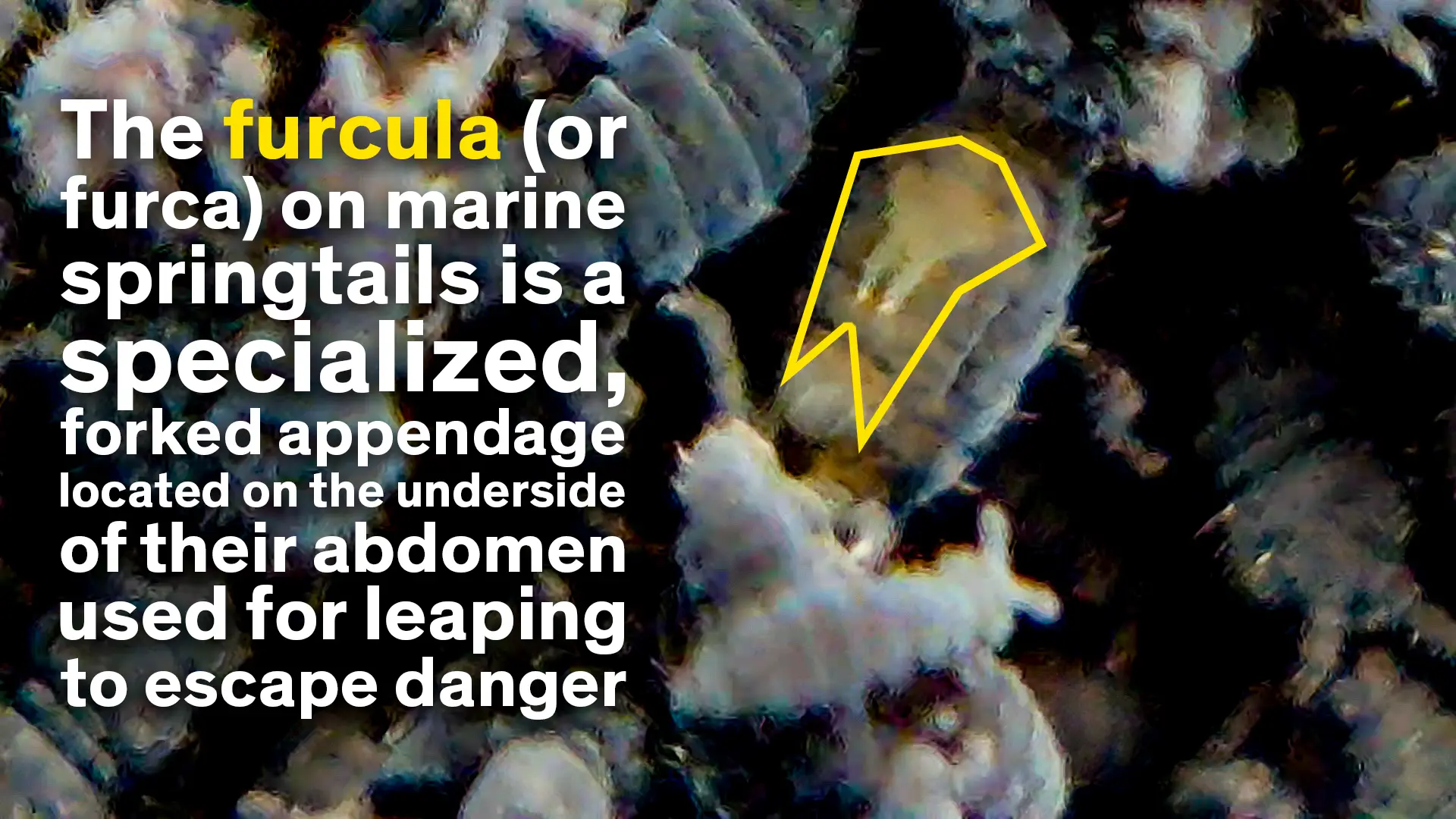
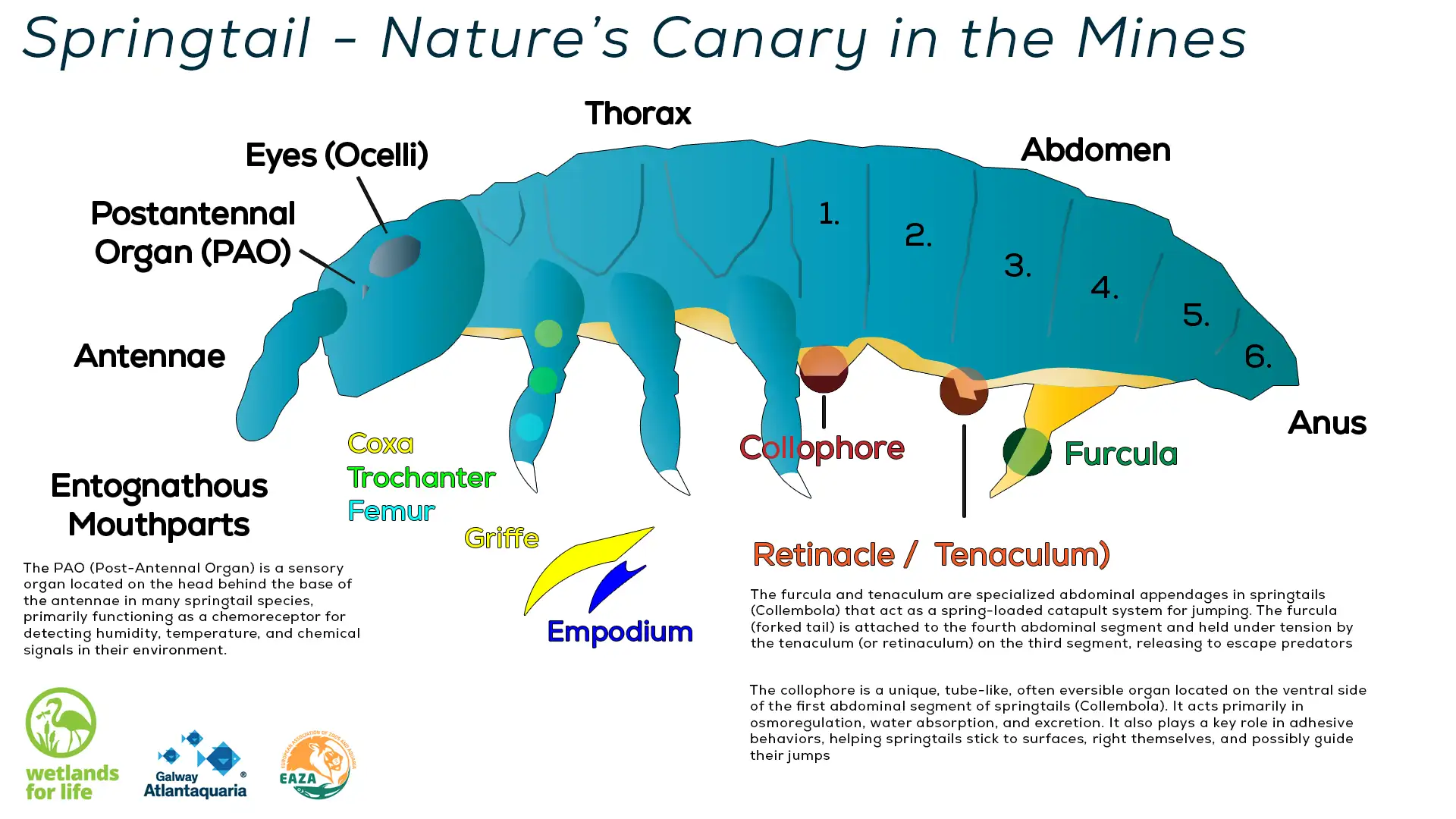
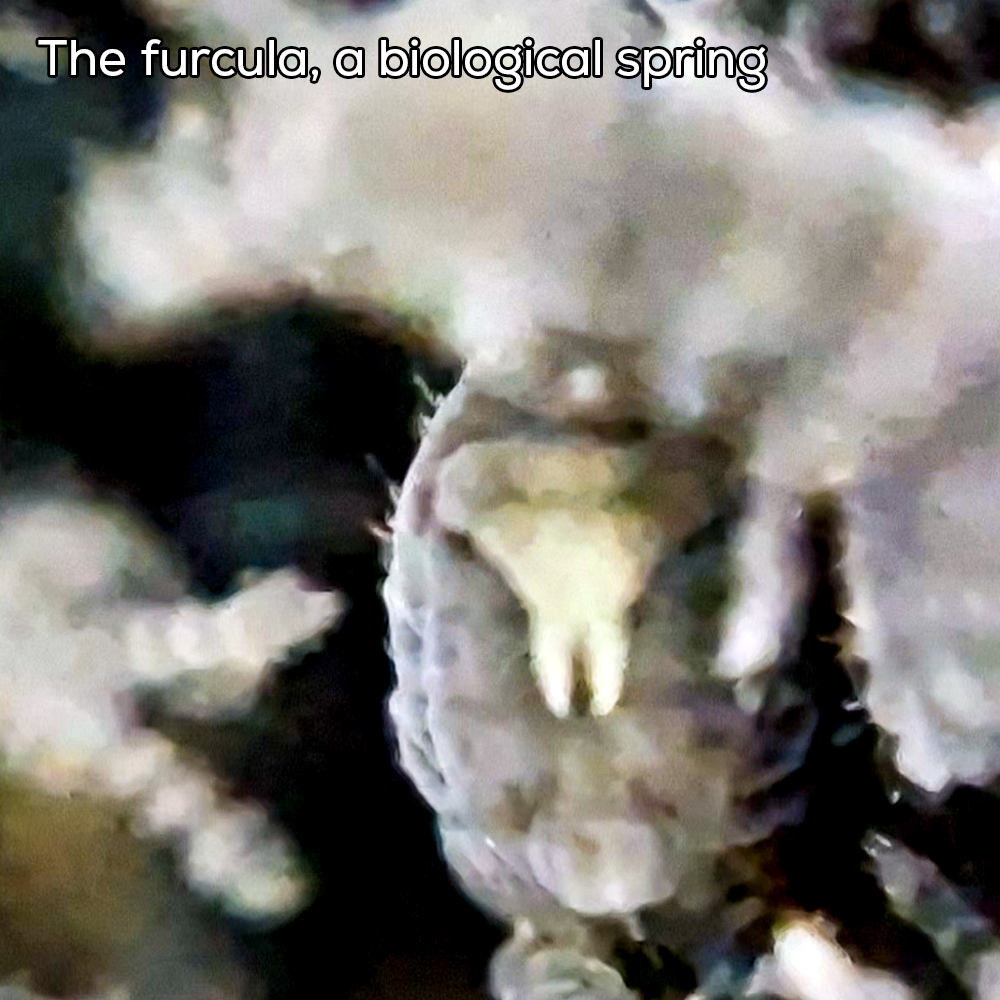
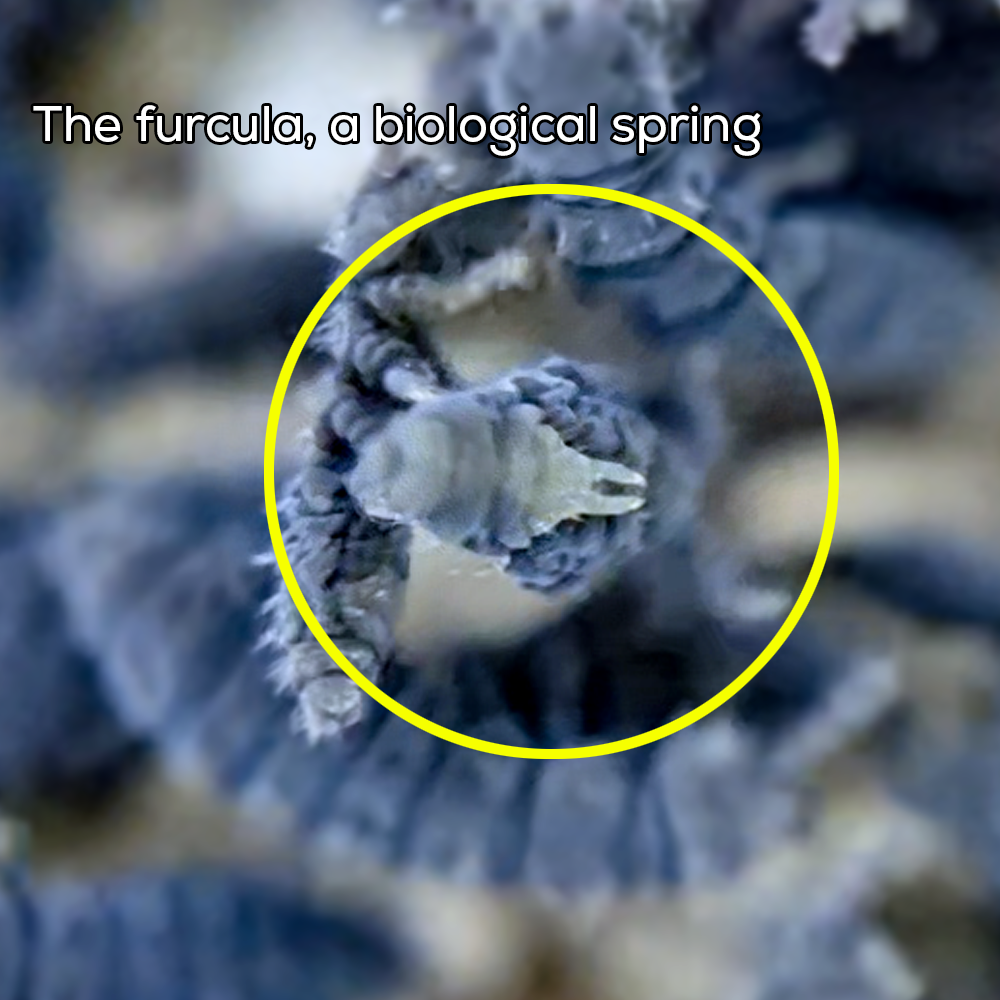
Equipped with a forked appendage (furcula) that enables jumping
Hydrophobic (water-repellent)
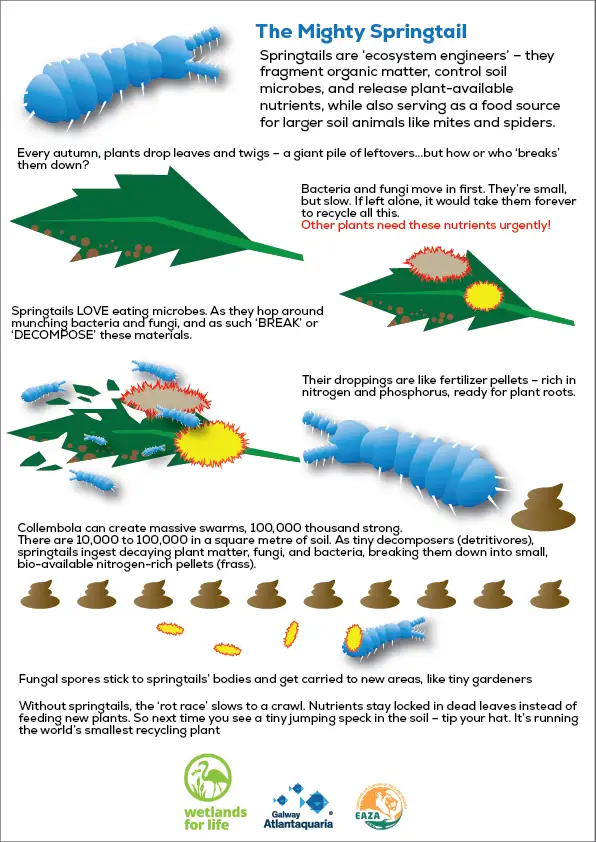
They feed on fungi, decaying plant material, and drift seaweed, making them important decomposers in coastal ecosystems (saproxylic decomposers in the woods). – as a major contributor to healthy ecosystems it means they have the potential to indicate when ecosystems are out of balance. That’s why some have been referred to as ‘Canaries in the undergrowth’.
They appear in large numbers called ‘Swarms’ along the upper shore, often gathering in natural depressions or small pits in the sand.
Why so many?
Probably Parthenogenesis? This is a form of asexual reproduction where an embryo develops from an unfertilized egg, effectively allowing females to produce offspring without a male. Common in invertebrates (bees, aphids) and some vertebrates (reptiles, fish), it allows for rapid population growth, though it results in lower genetic diversity.
(This is why there are millions of small juveniles spotted every day?)
Even though they’re tiny and often unnoticed, Collembola act like ecosystem “micro-engineers.” Without them, forests wouldn’t collapse overnight—but they would become:
- Less efficient at recycling nutrients
- Less fertile
- Less biologically diverse over time
In short, decomposition would slow, nutrients would bottleneck, and the entire soil ecosystem would become less dynamic and resilient.
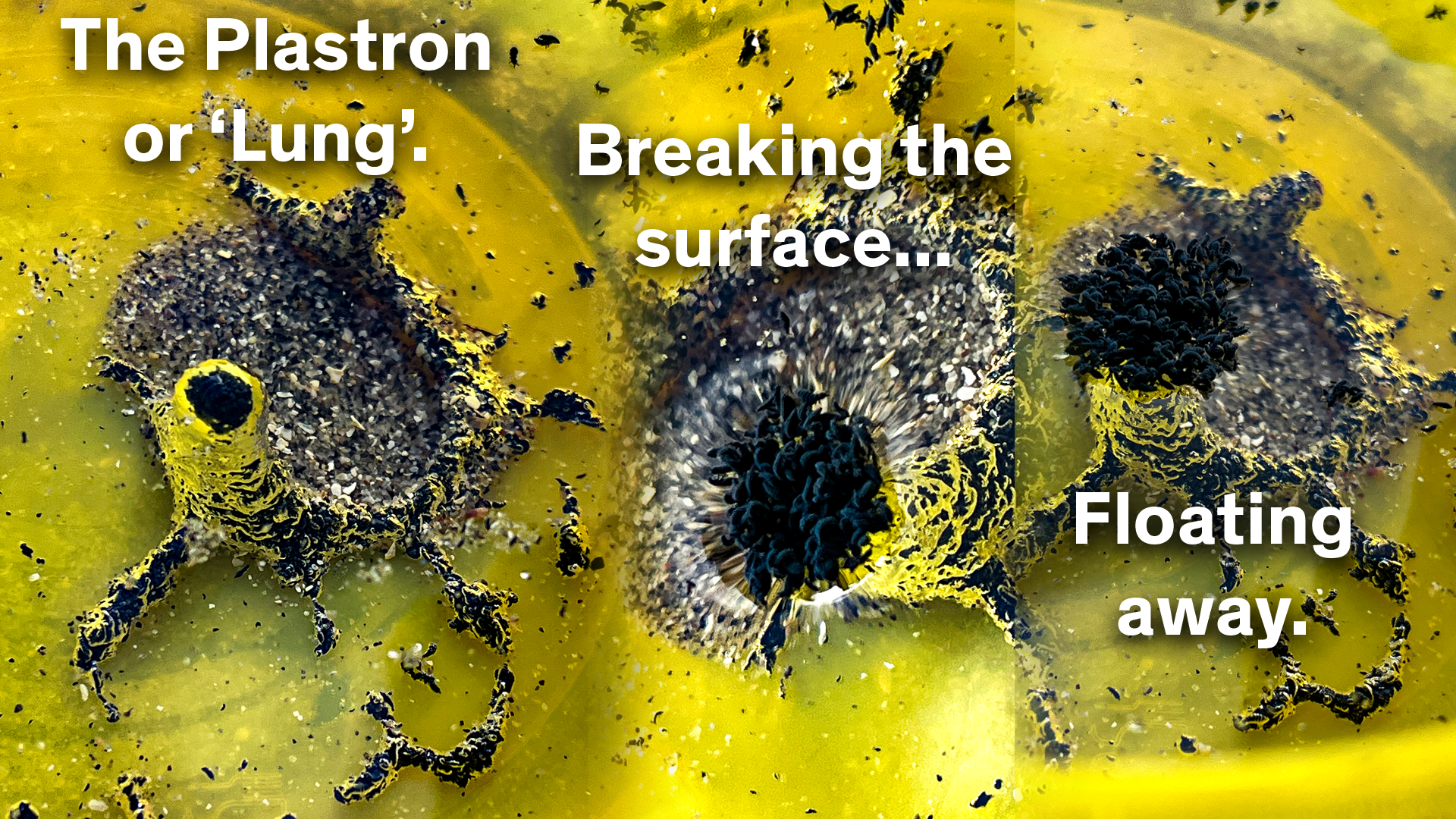
WATERPROOF
Their waxy, hydrophobic cuticle allows them to trap a thin layer of air around their bodies when submerged. This is an example of plastron respiration, where the trapped air acts as a temporary oxygen reservoir.
When clustered together, they can collectively stabilize larger air bubbles. These shared bubbles function like a “physical lung,” enabling them to survive periods of submersion during high tide.
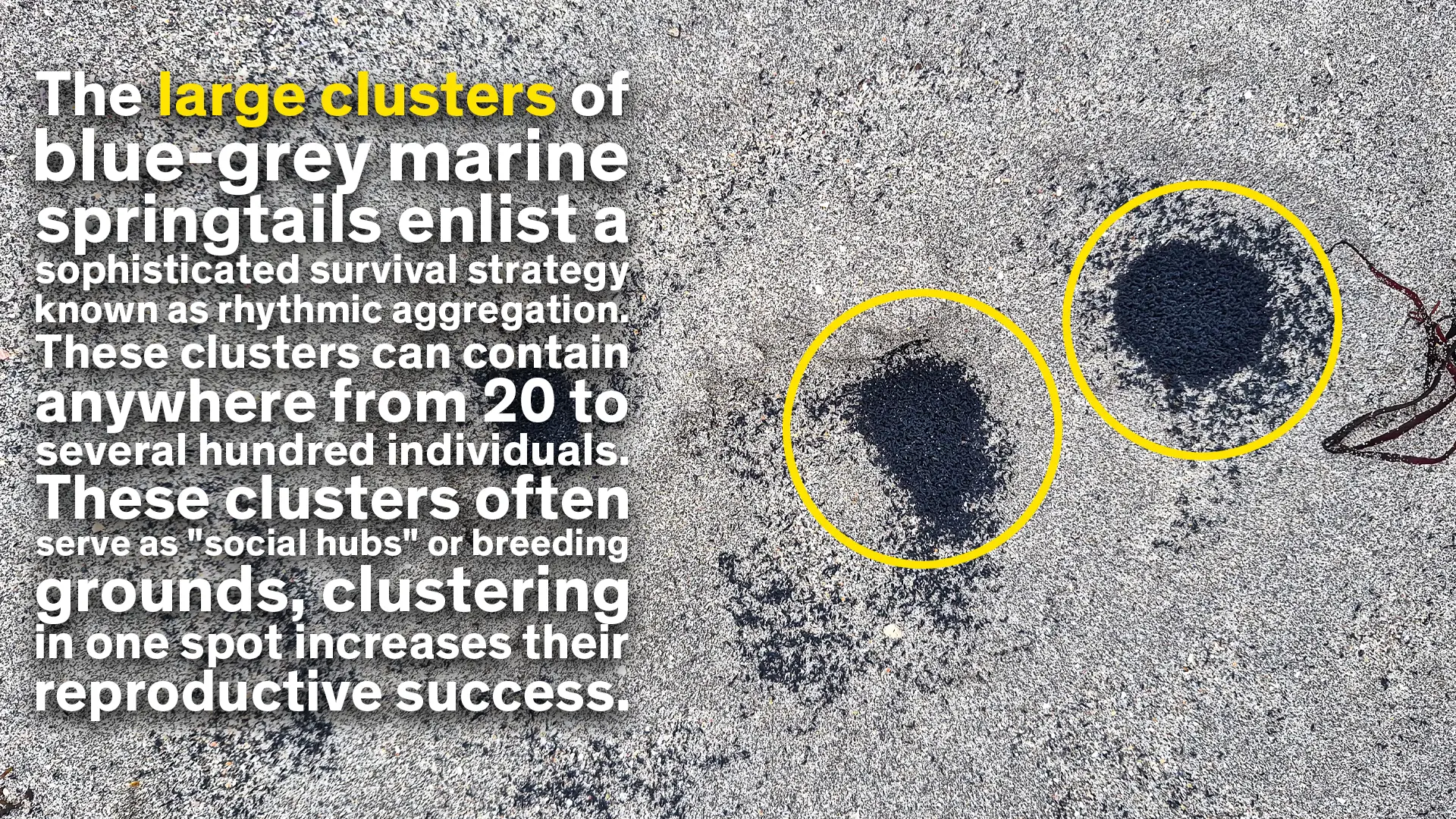
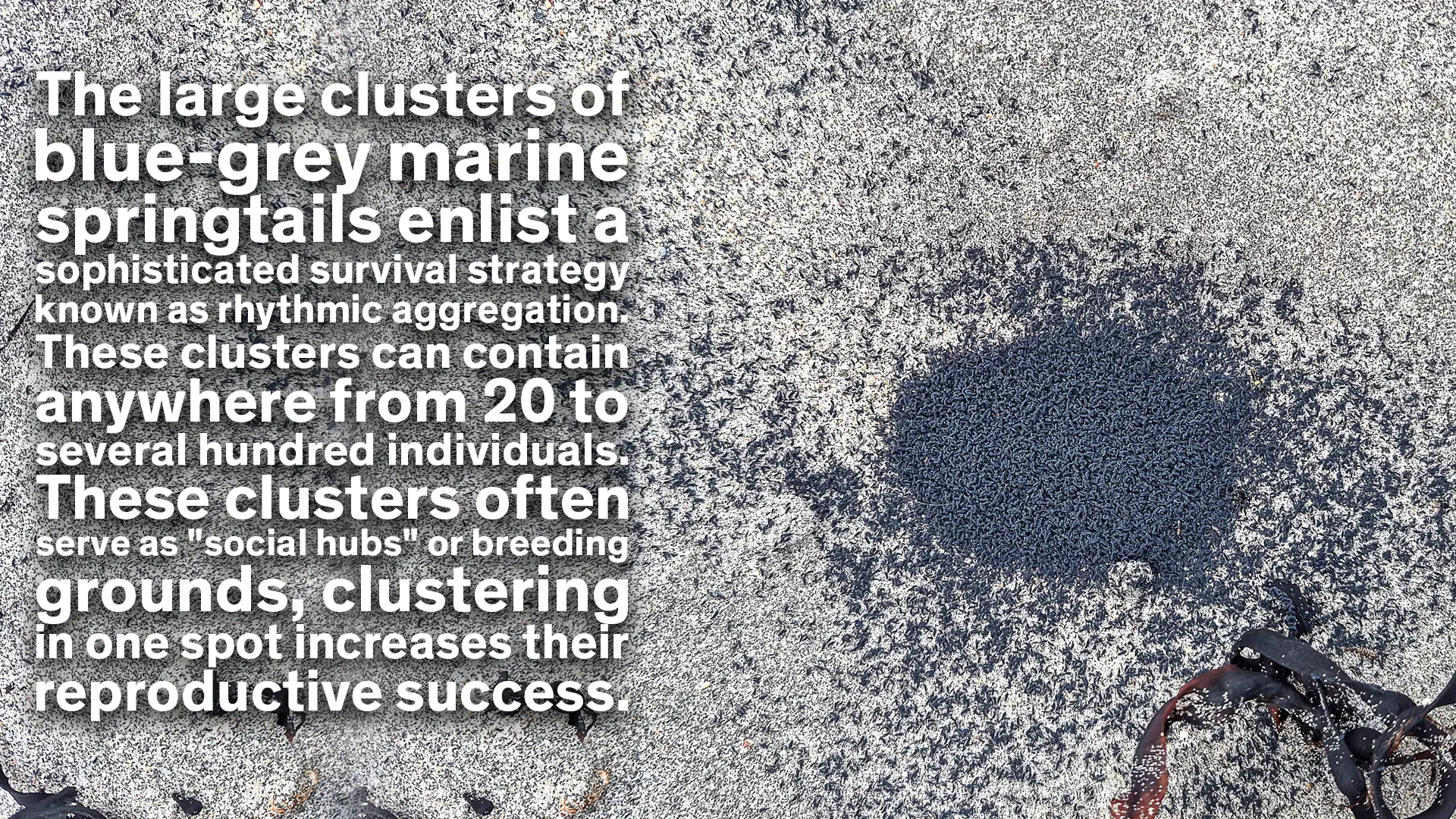
Aggregation Behaviour
These springtails frequently gather in large numbers—a behaviour known as aggregation. Groups can range from a few individuals to several hundred. Aggregation Pheromones: Springtails use chemical cues to communicate, signaling to others that an area is suitable for food, mating, or molting.
This behaviour may:
Improve survival during tidal submersion
Increase reproductive success
Help retain moisture in exposed conditions
Some species are known to use chemical signals (aggregation pheromones) and even internal biological rhythms to anticipate tidal changes.
How Did They Arrive at Grattan Beach?
Several dispersal mechanisms could explain their presence:
Rafting on Ocean Currents
They may have travelled on floating debris such as seaweed, driftwood, or marine litter.
Wind Transport
Due to their small size, springtails can become airborne and travel long distances as “aerial plankton.”
Phoresy (Hitchhiking)
They can attach to other organisms—such as insects or even marine animals—and be transported to new environments.
Local Migration
They may have migrated from nearby habitats during periods of environmental stress, such as heavy rainfall or drought.
Why Grattan Beach? Guess Only!
Grattan Beach provides ideal conditions for colonisation.
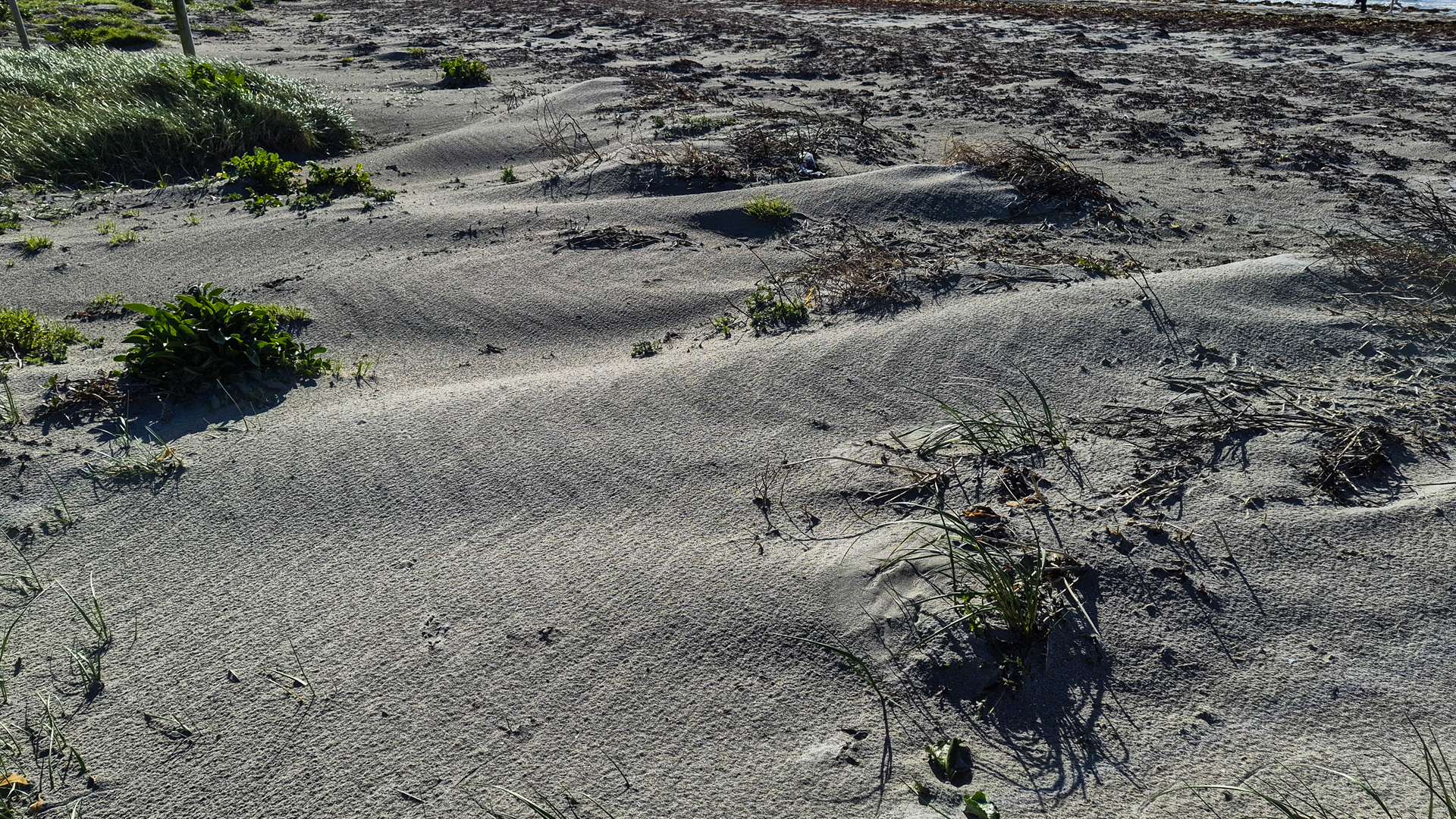
Habitat structure: Sand depressions and shelter from wind
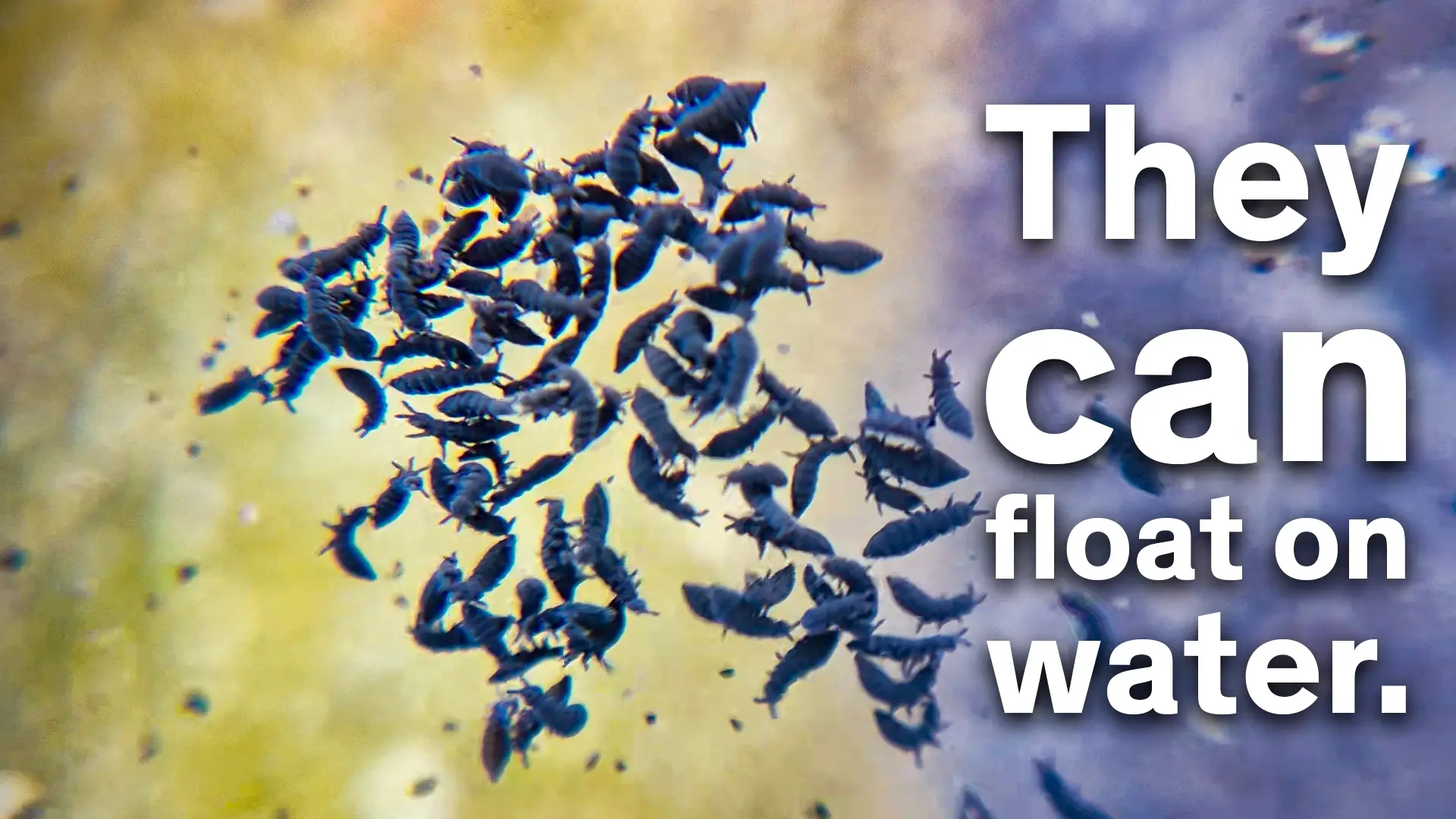
Hydrophobic adaptation: Ability to float and move across water
Rapid reproduction: Fast life cycles allow quick population growth
Their eggs are also highly resilient:
Capable of surviving harsh winter conditions, Able to absorb water, increasing resistance to desiccation, & Easily transported within damp crevices or debris
Summary
This discovery highlights the value of careful observation and the importance of initiatives like the Explore Your Shore! campaign by the National Biodiversity Data Centre.
While this may represent a newly recorded species for Grattan Beach, it is also possible that it has simply gone unnoticed until now. Given our previous surveys, however, its sudden abundance is particularly striking.
The springtails of Grattan Beach are a fascinating example of coastal biodiversity—small, easily overlooked, yet ecologically significant.
We encourage others to take part in the Explore Your Shore! experience and rediscover the richness of life along our coastlines, both large and small.
.