
Lichens of Grattan Beach, SALTHILL
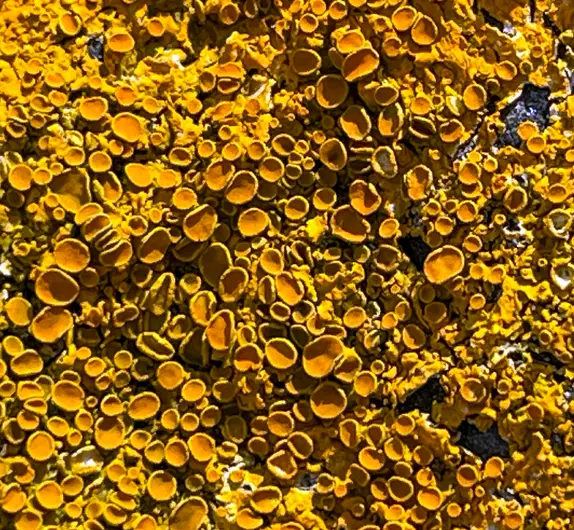
LICHENS
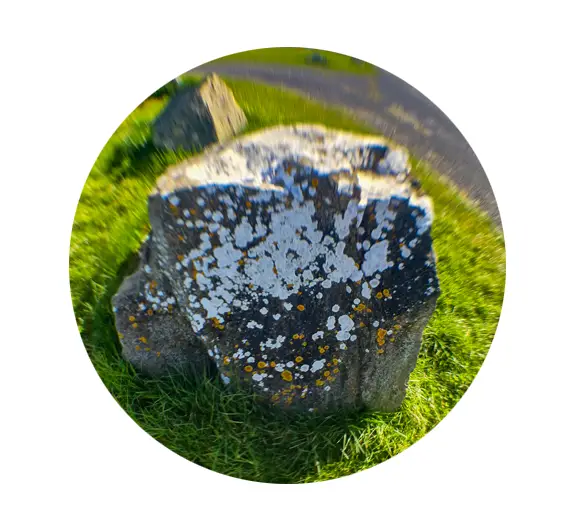
One of the most amazing—yet often overlooked or forgotten—stories of biodiversity is unfolding right before us every day. Let’s discover the beautiful Lichen of Grattan Beach, Salthill.
WHAT IS A LICHEN?
A lichen is not a single organism. It is a stable, symbiotic partnership between a fungus and a photosynthetic partner — either a green alga or sometimes a cyanobacterium (You can think of cyanobacteria as tiny solar-powered microbes that helped make Earth breathable.)
Together they form a complex, self-contained living system capable of surviving in some of the harshest environments on Earth. The Lichens are found on trees (corticolous lichens), soil (terricolous lichens), rocks (saxicolous lichens), mosses, old wood, and evergreen leaves.
Lichens lack roots, stems, or leaves, they are not plants. Instead, they absorb water and nutrients directly from the air and rain. Because of this, they are highly sensitive to pollution and are among the most important bio-indicators of air quality.
Lichens are installed on rocks by mechanical and chemical action.
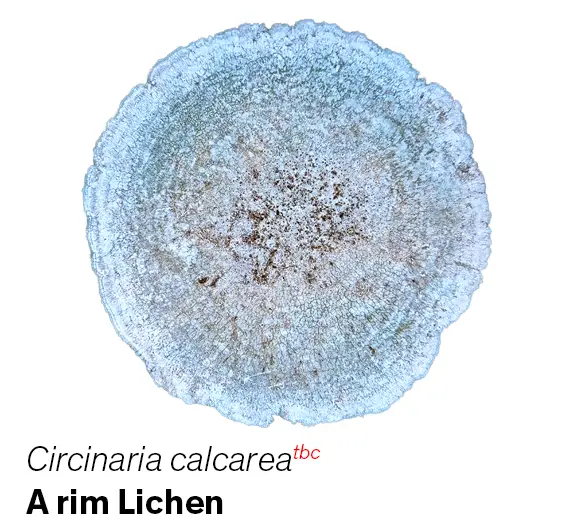
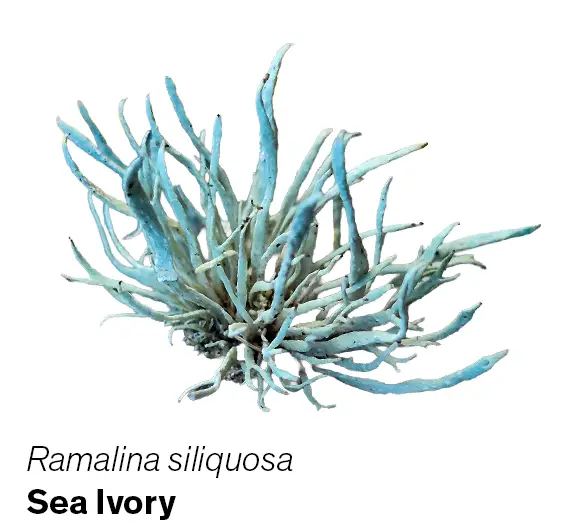
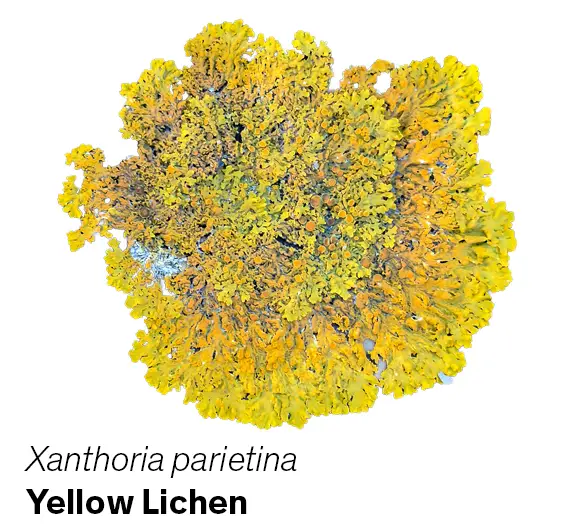
On limestone rocks, oxalic acid from lichens promotes the dissolution of calcium carbonate, which is transformed into calcium oxalate by thalli. Essentially, on rocks like limestone, tiny living things called lichens make a special acid that slowly breaks the rock, and then they turn the broken bits into a new substance.
On acidic rocks, lichen substances physically attack the rock by dissociating minerals.
“A lichen is the composite association of a fungus and a photosynthetic symbiont that results in a stable vegetative organism with a specific structure”.
Definition of a lichen by the International Association for Lichenology
Lichen Types
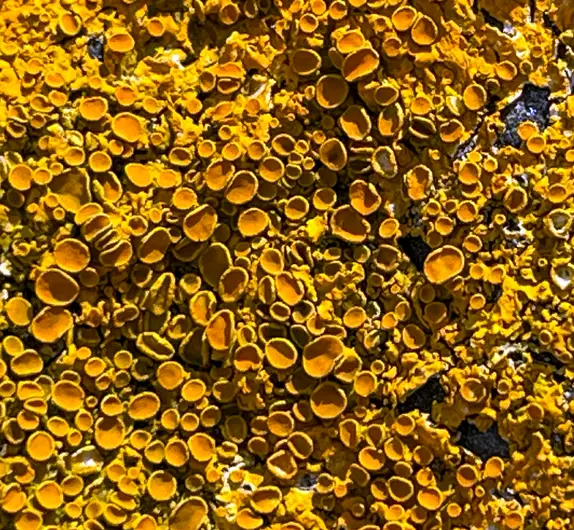
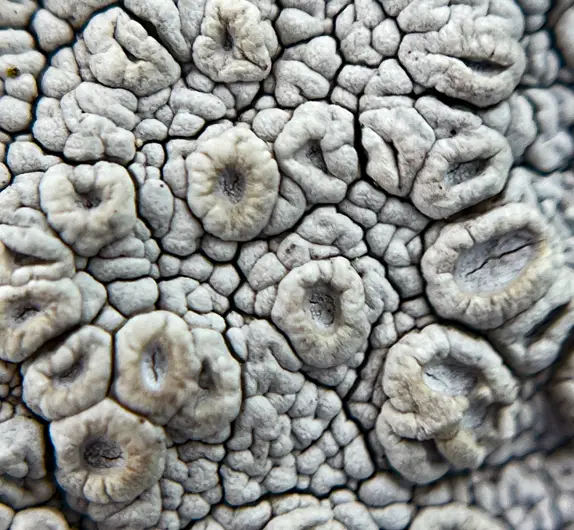
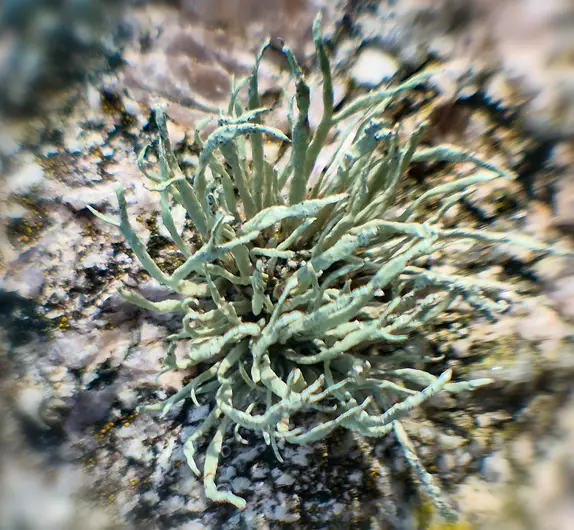
Lichens are symbiotic organisms classified by their growth forms, with the three main types being crustose (crust-like), foliose (leaf-like), and fruticose (shrubby). These forms describe how the lichen attaches to surfaces like trees, rocks, or soil, providing a reliable way to identify them in nature.
LICHEN STRUCTURE
The thallus grows in three different ways, helping us distinguish the different species.
Encrusting: Some lichen are flat and ‘encrusting’, meaning they form ‘crusts’ on rocks and other surfaces and are difficult to remove.
Leafy: Other species of lichen are leafy, or even puffy, and remain tightly stuck to rocks.
Branched: The third type of lichen looks more like a plant. It has a central point and hangs from a rock or stands upright from the rock like little branches.
The Lichen Partnership
A lichen is built from two organisms that depend on each other.
The Fungus -Mycobiont, responsible for anchoring the lichen to its substrate e.g., rocks, trees, and accumulating nutrients from air, dust, or moisture.
The Alga or Cyanobacterium -Photobiont, provides carbohydrates (sugars) through photosynthesis to the fungal partner (mycobiont), which in turn offers protection and moisture.
A simple poem to remember what is a Lichen;
“Fungus builds the house to stay, Alga makes the food each day.”
The fungus is the dominant partner and forms the main body of the lichen.
It provides:
- structure and shape
- protection from harsh weather
- shelter from drying out
- absorption of water and minerals from surfaces such as rock or bark
The fungus grows as a network of microscopic threads that form a protective home for the photosynthetic partner the Photobiont.
However, the fungus cannot make its own food.
The Alga or Cyanobacterium (Photobiont)
The photobiont is the photosynthetic (A chemical process that occurs in plants, algae, and some types of bacteria, when they are exposed to sunlight. During photosynthesis, water and carbon dioxide combine to form carbohydrates (sugars) and give off oxygen) partner. Because it contains chlorophyll, it can perform photosynthesis, producing sugars using:
- sunlight
- water
- carbon dioxide
These sugars provide the food that sustains both partners. In return for food, the fungus provides a safe, stable home.
This exchange makes lichens one of nature’s most successful symbiotic relationships.
Pioneer Species
Lichens are incredibly tough. They can grow where few other organisms survive, including:
- bare rock
- desert sand
- Arctic tundra
- windswept coastlines
Because they are often the first life to colonise bare surfaces, they are known as pioneer species.
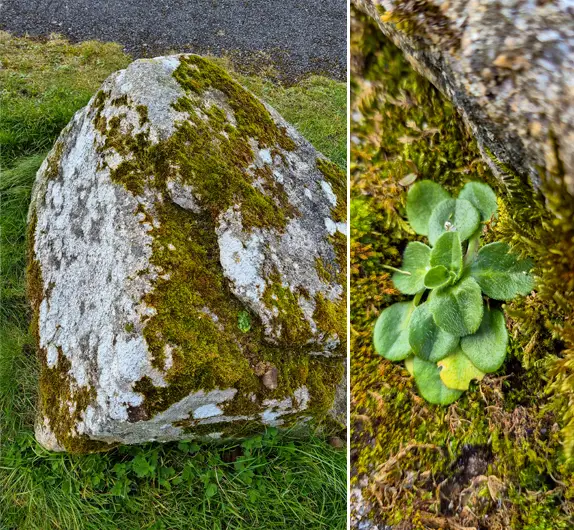
Over time they slowly break down rock and trap dust and organic matter, helping to form the first thin layers of soil that allow other plants to grow. There is no better example of this than the image above.
Bio-Indicators of Air Quality
Lichens absorb everything directly from the air, including pollutants. For this reason they are very sensitive to air pollution, particularly sulfur dioxide and nitrogen pollution.
Areas with many different lichen species usually have clean air, while heavily polluted areas often have few or none. Because of this, scientists use lichens as natural monitors of environmental health.
Summary
Observing and recording the Lichens on rocks is a very relaxing hobby, especially if you have a handheld macro lens for the phone. Under these lens you can find massive cities of colour and complexity. Lichens are really beautiful and we hope that you observe and appreciate these ecosystems on rocks a little more.
.